

Pyrolysis Drives Sustainable Development
At Beston Group, we are committed to driving innovation and applying cutting-edge pyrolysis technology to address environmental
pollution and resource waste. We aim for:
Low-carbon Future
- Have removed 135,000 tons of CO2e
- Promote an emissions trading market
- Mitigate global warming and climate change
Circular Economy Model
- Have diverted 81,000 tons of waste from landfills
- Adopt cleaner syngas energy sources
- Reuse waste resources and reduce the consumption of new resources
Waste to Resource Pyrolysis Solution
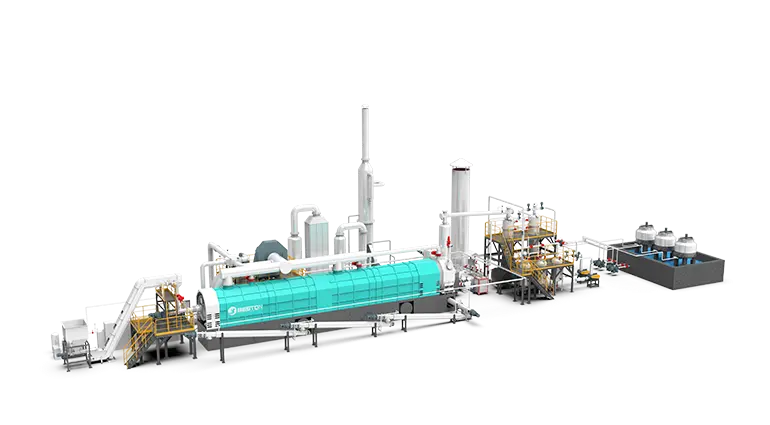
Pyrolysis technology is the process of decomposing organic materials in high-temperature and oxygen-limited conditions.
Transform
At temperatures between 180℃- 400℃, waste plastic/oil
sludge/tire/rubber decompose into pyrolysis oil, carbon
black, and syngas.
Apply
- Pyrolysis oil:
- Industrial fuel
- Oil refinement materials
- Chemical raw material
- Carbon black:
- Reinforcing agent in tires
- Pigment for inks and
coatings
Transform
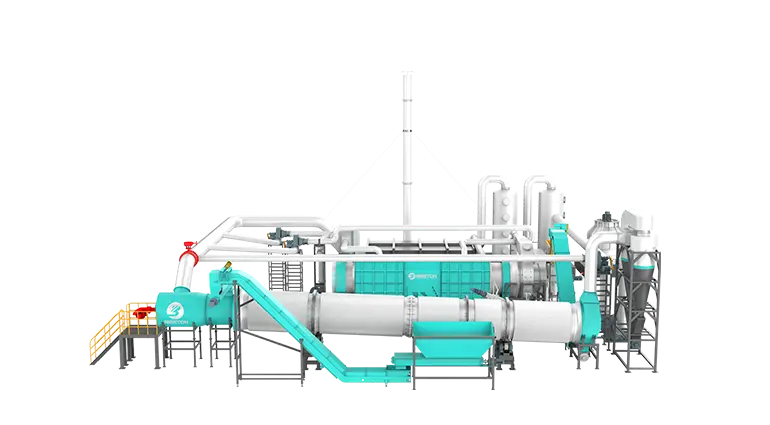
At temperatures between 380℃- 450℃, biomass decomposes
in a low-oxygen environment. They produce thousands of
tonnes of valuable biochar.
Apply
- Biochar:
- Carbon sequestration
- Soil improvement
- Building materials
- Animal feed additive
- Reducing agent in metal smelting
- Industrial fuel
Core Pyrolysis Technology Innovations
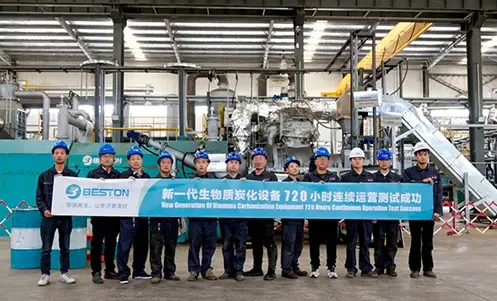
30-Day Continuous Biomass Pyrolysis Technology
Biochar pyrolysis plant with a tar and dust self-cleaning system, supports 30 days (720 hours) of continuous running.
- Suited to large-scale projects, with an annual capacity of up to 6,000 tons of biochar.
- Technically vetted by Puro.earth, Isometric, and Rainbow.
- Helps project developers generate carbon credits.
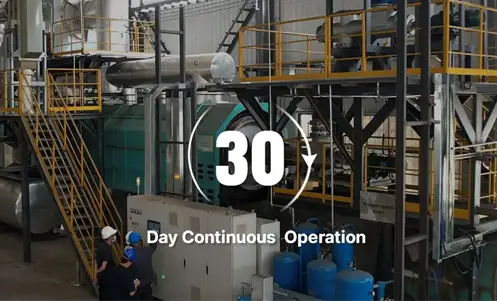
30‑Day Continuous Tyre, Plastic & Oil Sludge Pyrolysis Technology
Beston Blackgold P30 pyrolysis plant combines intelligent wax collection, mechanical decoking, and hot-air heating to help prevent condenser blockage and minimize reactor coking, enabling up to 30 days of continuous operation.
- Tire Recycling: 10,000 tons annually
- Plastic Recycling: 6,000 tons annually
- Oil Sludge Recycling: 12,000 tons annually
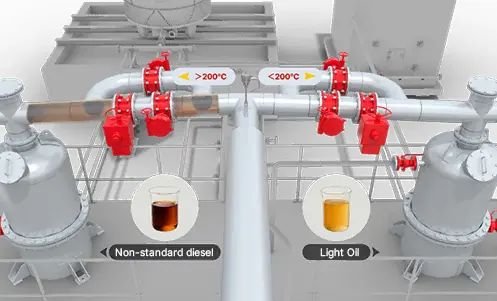
Light and Heavy Oil Fractionation Technology
Beston pyrolysis plant integrates pyrolysis and fractional distillation in a single process, producing light oil (boiling point below 200°C) and non-standard diesel (above 200°C) in one unit.
- No separate distillation equipment required, reducing footprint and capital cost.
- Higher oil yield through reflux & heat integration.

Plastic Catalytic Dewaxing Technology
Uses granular molecular sieve catalysts for plastic catalytic pyrolysis, which prevent wax oil clogging in pipes and solve storage and transportation issues.
- Minimize machine downtime, boosting production efficiency by 200%.
- Increase pyrolysis oil yield and improve oil quality (meet ISCC PLUS standard).
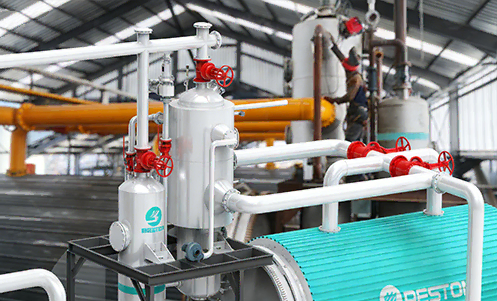
Dual System Catalytic Pyrolysis Technology
Manifold + catalytic tower dual systems enable a single pyrolysis machine to simultaneously catalytically pyrolyze waxy plastic, waxy oil sludge, or pyrolyze common tires and oil sludge.
- Save customers from redundant investments.
- Improve pyrolysis unit utilization efficiency and enhance economic returns.

Reactor Automatic Temperature Control Technology
Multi-fuel automatic combustion system + hot-air reuse system achieves precise ±10°C temperature control.
- Improve automation leveal, and reduce operational complexity
- More efficient combustion, better emission control, and easier environmental compliance

EU Standard Dedusting Technology
High-end flue gas dedusting technology that integrates cooling, denitration, desulfurization, and wet electrostatic precipitator processes enables EU emission standards. Some data as follows:
- SO: 50 mg/m³
- NOx: 200 mg/m³
- HF: 1 mg/m³
- HCl: 10 mg/m³
- Total dust