Biochar Production Equipment

Biochar Production Equipment PC Banner

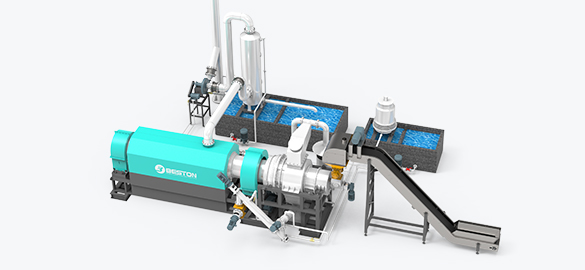
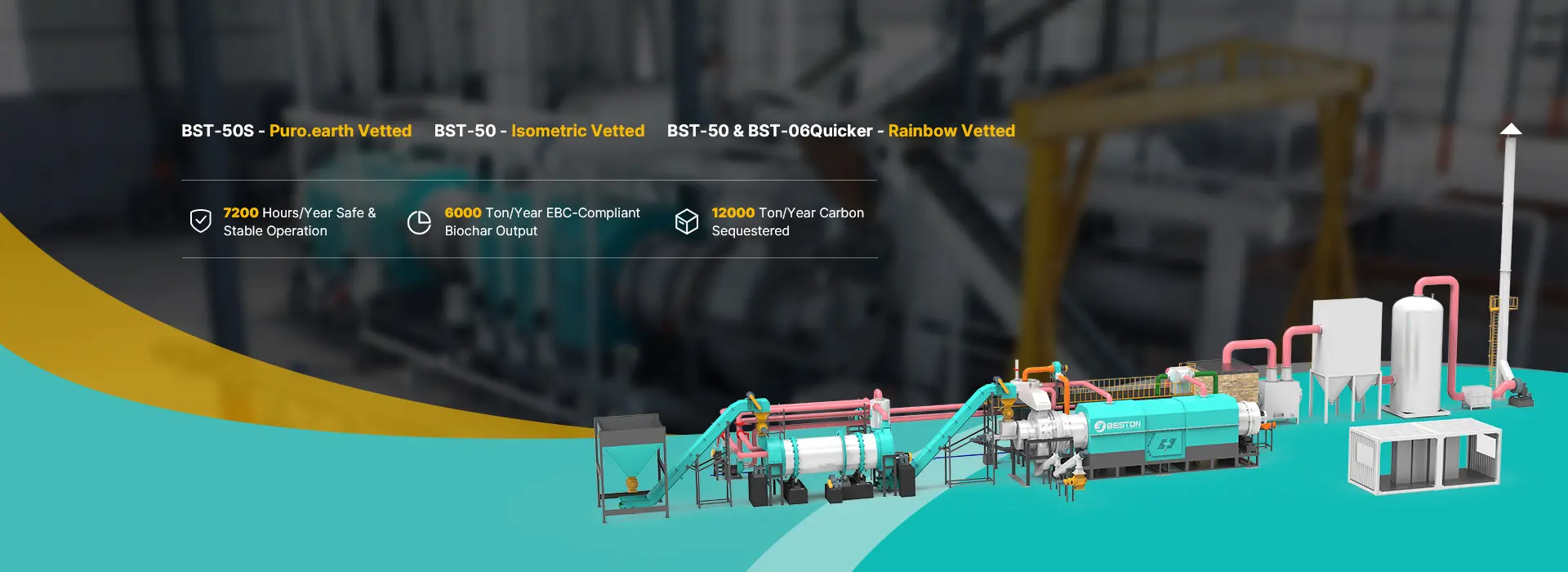
Biochar production equipment is the core industrial solution for large-scale Carbon Dioxide Removal (CDR). Ultilizing pyrolysis technology (heating biomass without oxygen), the biochar machine converts biomass into biochar. This process locks atmospheric carbon for centuries and breaks the natural carbon cycle of biomass decay. Beston Group’s technical pathway has earned recognition from leading international carbon removal (CDR) standards, Puro.earth and Isometric.  It delivers a proven, definitive solution for global climate action, while enabling businesses to secure high-value, tradable carbon credit assets.

Beston Biochar Production Technology Meets CDR Standard

Puro.earth LogoPuro.earth Vetted

Complying with international biochar methodology, the Beston BST-50S model has passed Puro.earth’s technical vetting. It produces premium biochar, allowing investors to generate globally recognized CORCs (CO2 Removal Certificates) for voluntary carbon markets.

Download Evaluation Statement

Isometric LogoIsometric Pre-approved

To ensure the highest level of scientific integrity, the Beston BST-50 has passed Isometric’s pre-approval. Isometric’s rigorous monitoring, reporting and verification protocols ensure every ton of carbon removed is scientifically robust, permanent and free from double-counting. This gives investors full confidence in the measurable climate impact of their biochar projects.

Key Benefits

With trust endorsement from Puro.earth and Isometric, the Beston BST-50S biochar production machine delivers core values for your CDR project:

  • Shorten the ROI cycle: Skip lengthy third-party review waiting periods, accelerate CORCs carbon asset issuance and market listing.
  • Avoid compliance risks: Eliminate the risk of project development failure caused by substandard technical performance.

Beston Industrial-Scale Biochar Production Equipment Passes Carbon Removal Technical Vetting

Biochar Quality Meets EBC Standards: Eligible for Carbon Removal

Third-party laboratory testing confirms the final biochar meets the European Biochar Certificate (EBC) standards, delivering superior environmental and climate performance. This compliance ensures your project functions as a high-quality carbon removal (CDR) solution, fully eligible for international carbon credits.

High Carbon Persistence: Guaranteed long-term carbon sequestration in soil for centuries.
Contaminant Compliance: Low PAH and heavy metal levels, ensuring safe application in agriculture and carbon markets.
Expanded Economic Potential: Unlock premium pricing for biochar as carbon removal applications.

Tested Biochar from Beston Biochar Machine Meet EBC Standard

Load capacityEBC StandardGerman LaboratoryChinese Laboratory
H/C Molar Ratio<0.4 – 0.70.45 (Generally Meets All Application Standards)0.11 – 0.32
Heavy MetalDepends on Specific ApplicationFully Meet AllFully Meet All
PAHS-8Depends on Specific ApplicationFully Meet All/
PAHS-16<6 mg/kgCompliant with EBC-Feed, Urban, Basic Material
Slightly above EBC Feed-Plus, Agro-Bio, Agro
0.2 mg/kg

Parameters of Biochar Production Equipment for Sale
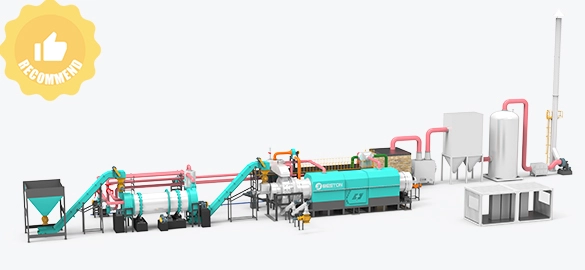
BST-50S Biochar Production Equipment for Sale

BST-50S Model

  • Suitable for enterprises familiar with carbon sinks aiming for large-scale production and maximized profits.
  • Suitable for enterprises aiming to strengthen brand image through green biochar carbon removal.

BST-06 Biochar Production Equipment for Sale

BST-06 Model

  • Ideal for testing carbon sink feasibility with low cost and low risk.
  • Help investors understand the carbon sink trading model.
  • Suitable for start-up enterprises, projects with demonstration or educational purposes, etc.
ModelBST-50 StandardBST-50S LMBST-50S HMBST-50S MAXBST-06 StandardBST-06MAX
Time to Market201520222022202220252025
Operating ModeContinuousContinuousContinuousContinuousContinuousContinuous
ApplicationCommercial ScaleCommercial ScaleCommercial ScaleCommercial ScaleTestingTesting
Dust Removal SystemStandardAdvancedAdvancedAdvancedStandardAdvanced
Feeding Capacity10-15m³/h10-15m³/h10-15m³/h10-15m³/h100-300KG/H100-300KG/H
Biochar Discharge Temperature45℃45℃45℃45℃45℃45℃
Puro.earth Authentication Model××
Maximum Pyrolysis temperature650℃650℃650℃850℃650℃
Service Life5-8 years5-8 years5-8 years8-10 years5-8 years
Annual Operating Time7200 hours7200 hours7200 hours7200 hours8000 hours
Land Space Required (L*W*H*m)35m×15m×8m65m×15m×8m65m×15m×8m65m×15m×8m25m*18m*6m
Total Power (KW)201.25kW453.35kW505.35kW505.35kW129.79162.79
Cooling MethodRecycling cooling WaterIndustrial chillerIndustrial chillerIndustrial chillerRecycling cooling WaterIndustrial chiller
Installation Period (Calendar Days)507070704550

Industrial-Scale Biochar Carbon Removal Project in Spain

Euthenia Energy is expanding into biochar carbon removal using industrial-scale equipment supplied by Beston Group. This is backed by over 25 years of experience from its parent company Euthenia Capital in carbon management, renewable energy, and waste treatment projects. The partnership offers a commercial reference for biochar-based CDR projects in Europe.

Project Information

  • Customer: Euthenia Energy
  • Project Location: Spain
  • Project Timeline: Jan 2023 Launch | Mar 2024 Start Operation
  • Project Configuration: BST-50 industrial biochar machine + dryer + crusher
  • Annual Output: 6,000 tons of biochar
  • CO₂ Sequestration Potential: ~12,000 tons/year
  • Application: Biochar-based carbon removal and carbon credit generation

Project Status

Current Status:

Installed, commissioned, and in stable operation

Industry Recognition | On-site Technical Exchange 

In November 2025, the project site hosted the 2025 European Biochar CDR Conference. Experts conducted an on-site inspection of the biochar production equipment. They studied and verified its operational stability and engineering reliability, confirming its practical feasibility for commercial, industrial-scale CDR applications.

View On-site Biochar Machine
Euthenia Energy CEO Introduces the Biochar Production Project
Palm Shells in Spanish Biochar Production Project
Palm Shells
Onsite Biomass Feeding of Biochar Prduction Equipment in Spain
Biomass Feeding
Introduce Biochar Discharge System
Biochar Output from Spain CDR Project
Biochar Output

Video Review of 2025 European Biochar CDR Conference

Biochar Carbon Removal Application Prospect & Scenarios

Biochar Carbon Removal (BCR) is a negative emissions technology. Plants capture CO₂ from the atmosphere via photosynthesis. Biochar converts this carbon into a highly stable form that can persist underground for centuries. This makes BCR a viable solution for climate change mitigation.


Table 1: BCR Market Data (2022–2025 H1)
Indicator 2022 2023 2024 2025 (H1)
Contracted BCR volume (Mt) 1.6 Mt
Cumulative BCR volume (Mt) ≈3.04 Mt
Market value (USD) $14.6M $33.9M $181.5M
Table 2: Top BCR Buyers and Representative Purchases
Top Buyer Representative Purchase
Microsoft 1.24 Mt biochar CDR offtake (Q2 2025, Exomad Green)
Google ~100,000 t biochar-related CDR agreement (India)
Boston Consulting Group 50,000+ t durable CDR purchases (incl. biochar)
Biochar Soil Improvement and Sustainable Agriculture

Soil Improvement: Sustainable Agriculture

This is the most mainstream application of biochar globally. Biochar is applied to farmland, orchards or plantations, delivering multiple benefits.

  • Application Methods: Biochar can be directly incorporated into the soil via tillage, or co-applied with compost or chemical fertilizers.
  • Carbon Removal Logic: Biochar features a highly stable carbon structure, persisting in soil for centuries without carbon release via natural decomposition.
  • Co-Benefits: Enhances soil water and nutrient retention, regulates pH levels, reduces fertilizer leaching, and may mitigate soil emissions of methane (CH₄) and nitrous oxide (N₂O).
Biochar in Building Materials and Carbon-Negative Construction

Building Materials: Carbon-Negative Construction

This is an emerging “non-soil” carbon sequestration approach, in which carbon is sequestered within artificial manufactured objects.

  • Application Methods: Integrating biochar as a functional additive into concrete, asphalt, bricks, or other construction materials.
  • Carbon Removal Logic: As long as the buildings or industrial products are not incinerated, the carbon remains physically locked within the material matrix for its entire lifecycle.
  • Added Value: Reduces the overall weight of construction materials; enhance physical properties, such as fire resistance, thermal insulation, or electromagnetic shielding.
Biochar as Metal Smelting Reducing Agent and Decarbonized Metallurgy

Metal Smelting Reducing Agent: Decarbonized Metallurgy

This is a high-value pathway for biochar to enter the heavy industry decarbonization sector, aiming to replace traditional fossil-based coke in metallurgical processes.

  • Application Methods: Utilizing biochar as a bio-reductant to substitute for coke or coal in blast furnaces (steel production) or electric arc furnaces (silicon and ferroalloy production).
  • Carbon Removal Logic: By replacing fossil carbon with biogenic carbon in the smelting process, it achieves a “green substitution” of carbon sources.
  • Added Value: Enhance the purity of the final metal products; optimize thermodynamic efficiency during smelting to improve High Reactivity; reduce metal smelting cost.
Biochar Feed Additive and Low-Carbon Animal Husbandry

Feed Additive: Low-Carbon Animal Husbandry

The application of biochar in the livestock industry has grown rapidly in recent years, focusing primarily on carbon emission reduction and waste resource utilization during the farming process.

  • Application Methods: Incorporating a small percentage of biochar into animal feed to improve gut health.
  • Carbon Sequestration Logic: Biochar is ultimately returned to the soil along with the manure, achieving long-term carbon storage in the ground.
  • Added Value: Significantly reduces ammonia odors and greenhouse gas emissions (such as CH4 and N2O) from livestock farms.

How Biochar Is Made — Biochar Production Equipment Workflow

Step 1 – Biomass Prements & Feeding

  • Dry and crush biomass to feeding requirements: Moisture Content < 15% | 5mm< Particle Size < 20mm
  • Load biomass waste to the silo. Then screw belt conveyor transports bioamss into the inner cylinder of the biomass pyrolysis reactor.

Step 2 – Biomass Pyrolysis into Biochar

  • In the inner cylinder (medium-temperature zone), biomass materials undergo drying and semi-carbonization.
  • Then the screw pushes them to drop into the outer cylinder (high-temperature zone) for complete pyrolysis, producing biochar.

Step 3 – Syngas & Flue Gas Recycling and Treatment

  • Syngas Recycling: Syngas generated during the pyrolysis process is purified and then used as the heat source for the reactor.
  • Flue Gas Thermal Energy Utilization: Flue gas heat is partially used for dryer heating and partially for pipeline insulation to prevent tar and wood vinegar condensation and biochar equipment blockage.
  • Exhaust Gas Treatment: After the heat energy is recovered, the final flue gas undergoes multiple dedusting treatment for compliant emission.

Step 4 – Biochar Discharging

Discharge biochar through the water-cooling discharging system. Normally, the final biochar temperature is ≤45°C.

Technical Excellence: Why Beston Biochar Machine Excels in CDR Projects

720h Continuous Operation

720h Continuous Operation

The Tar & Wood Vinegar Self-Cleaning System prevents blockages caused by tar, wood vinegar, and other substances, ensure 7200 hours stable operation annually. Benefits:

  • Reduce downtime and maintenance and related economic loss.
  • Better meet environmental compliance.
  • Enhance safety by lowering the risk of fire and dust explosions.
dMRV Intergation and Full Lifecycle Support

dMRV Intergation and Full Lifecycle Support

Beston’s biochar production equipment can be integrated with dMRV (Dynamic Monitoring, Reporting, and Verification) systems and APIs for real-time lifecycle data reporting. This make big sence to carbon removal project.

  • Guarantees the reliability and transparency of carbon removal data for third-party verification.
  • Accelerate the carbon credit certification process.
Safety Guarantee Designs

Multiple Safety Guarantee Designs

  • Dynamic Sealing Design: Biochar making machine’s inlet and outlet are sealed using a combination of materials, ensures reliable dynamic airtightness during operation.
  • Two-way Explosion-proof System: The explosion-proof hole and explosion-proof water seal prevent equipment damage or safety accidents.
Eco-friendly Guarantee Designs

Eco-friendly Guarantee Designs

  • Multi-stage Cyclone Dedusting: Ensures a clean operation site via dedusting at the dryer, feed port, and connecting pipes.
  • High-end Exhaust Gas Treatment: Multi-stage treatments ensures compliance with strict EU emission standards.
Energy-saving Designs

Energy-saving Designs

  • Dual-cylinder + Rotary Reactor:  Fully carbonizes biomass, improves thermal efficiency and achieve over 10 m³/h processing capacity.
  • Syngas Recycling Technology: Achieves self-sustaining energy utilization, saving fuel consumption and cost by 20%.
Durable Reactor Structure

Durable Reactor Structure

  • 310s Stainless Steel Reactor Material: Offers high resistance to heat and corrosion and ensures reliable performance of biochar machine.
  • Three-point Support Design: Evenly distributes the load and pressure, reducing machine wear or tilting for greater durability.

Recyclable Biomass to Make Biochar – Types/Requirements

Recyclable Biomass to Make Biochar

Common Biomass Types to Make Biochar

  • Agricultural Waste: Rice husk, straws, sugarcane bagasse, jute stalks.
  • Forestry Waste: Wood chips, sawdust, wood shavings, bamboo waste, eucalyptus bark.
  • Food Processing Waste: Coconut shells, palm kernel shells, peanut shells, almond shells, hazelnut shells, olive husks, and coffee grounds.
  • etc.

Standard to Choose Biomass Material Types

  • Good flowability: Poor flowability can cause materials to stop flowing and accumulate in the hopper (e.g., palm fibers have poor flowability).
  • Uniform size: Oversized materials can jam the feed screw, while overly thin materials tend to turn into powder.
  • Low dust/powder: Excessive powder in raw materials can clog pipelines and affect biochar quality. (Harder materials, such as coconut or fruit shells, are recommended.)

More Biochar Projects Practices: Various Biomass Recycling

Rice Husk Recycling in Colombia
Straw Recycling in Croatia
Wood Recycling in Finland
Biochar Machine in Colombia to Recycle Rice Husk

Rice Husk Recycling Project in Colombia

Project Goals

  • Need a large-scale solution for recycling rice husk.
  • Configure drying solution to counteract the impact of local rainy seasons.

Project Status

Installation Completed | Currently Operating

Project Outcomes

  • Biochar production equipment runs stably even in rainy seasons, with no downtime concerns.
  • Produce high-quality biochar that meets soil improvement standards, and can also be fuel.
Biochar Production Machine in Croatia to Recycle Straws

Wheat Straw Recycling Project in Croatia

Project Goals

  • Recycle large amounts of wheat straw, significantly reducing its volume.
  • Produce biochar for use as an alternative fuel & soil improvement.

Project Status

Installation Completed | Currently Operating

Project Outcomes

  • Reducing environmental impact and promoting circular agricultural practices.
Biochar Production Equipment in Finland to Recycle Wood

Wood Chips Recycling Project in Finland

Project Goals
Utilize the abundant local wood resources to produce barbecue charcoal and generate profit.

Project Status
Installation Completed | Currently Operating

Project Outcomes

  • Increase wood resource utilization, reduce environmental impact of waste, and foster the sustainability of the wood processing industry.
  • Offer high-quality barbecue charcoal to the market, and earn profit through sales.

Huge Biochar Market Potential: Worth to Invest

The biochar market is rapidly growing, backed by carbon neutrality goals and strong global demand. While data estimates vary among research institutions, the consensus is clear—investing in biochar pyrolysis machine is a forward-thinking decision.

  • From World Bank: Global carbon pricing and carbon market revenues have exceeded $100 billion.
  • From McKinsey Management Consulting: By 2050, the carbon sink industry is projected to reach a market value of up to $1.2 trillion.
  • From International Biochar Initiative: Biochar continues to lead in providing persistent carbon dioxide removal (CDR) credits in the voluntary carbon market (VCM), accounting for over 90% of global deliveries in 2023. Global biochar production is estimated to increase by at least 350,000 metric tons (mt) annually.

Biochar Market Worth Investing in

Beston Group Provides Full-Cycle Support for Your Biochar Projects

Phase 1: Solution Design

  • Customized Process Layout: We design the entire flow from pretreatment to emission control with optimized 3D site layouts.
  • Global Compliance Support: We provide essential technical data and emission parameters to help you secure local permits and registry approvals.

Phase 2: Manufacturing

  • High-Standard Production: Our own factory utilizes precision machining to ensure reactor durability under extreme high-temperature conditions.
  • Premium Component Integration: Every system features world-class parts (e.g., Siemens PLC) and undergoes rigorous pressure and non-destructive testing before shipment.

Phase 3: On-site Delivery

  • On-site Installation Supervision: Our senior engineers oversee foundation work and assembly to ensure the project transitions perfectly from blueprint to reality.
  • Operational Team Empowerment: We provide comprehensive SOPs and maintenance coaching, enabling your local team to manage the plant independently and safely.

FAQ of Biochar Production Equipment

How much Does A Biochar Machine Cost?

As specialists in biochar production technology, we provide customized equipment configurations tailored to your specific processing requirements. Pricing is determined by the output capacity and the specific carbonization technology required for your project.

What is the Biochar Yield of the Equipment?

Based on our testing with sawdust, rice husk, and crushed coconut shells, processing 1 ton biomass with moisture content below 10% can get 280kg-310kg biochar. The yield ratio stays stable at about 3:1 after the biomass moisture is removed.

How to Handle Tar and Wood Vinegar Byproducts?

We do not collect tar separately. Tar is kept in a gaseous state and recycled into the combustion chamber for incineration.

Do you accept material testing? What data can we obtain?

We accept raw material testing. Available test data include carbon yield, raw material moisture content, finished product moisture content, combustible gas temperature, material reaction temperature, and liquid precipitate output.

Looking Forward to Cooperating with You

Beston Group has been dedicated to manufacturing biochar production equipment for many years. We have always insisted on a customer-centric business philosophy and strived to provide customers with high-quality, efficient, and customized products and services. Our biochar machines exported all over the world have had a positive impact on fields such as renewable energy production, soil improvement, and carbon neutrality. We are looking forward to cooperating with more friends and opening a wider market! More dairly news in Linkedin!

    Contact Us

    The following items will help you identify key information about your project, which will enable us to work on a competitive solution proposal.

    Please specify your requirement by referring to the following aspects:

    1. What kind of solution will meet your demand? (Key point)

    2. What kind of end product are you planning to have? (Right solution begins from material and product)

    3. When is the project supposed to be running?

    4. Budget for machinery purchasing? (Key info for right model)

    5. Details on your raw materials and end product application.

    5. Points that you really focus on. (Customized service from our project consultant)