
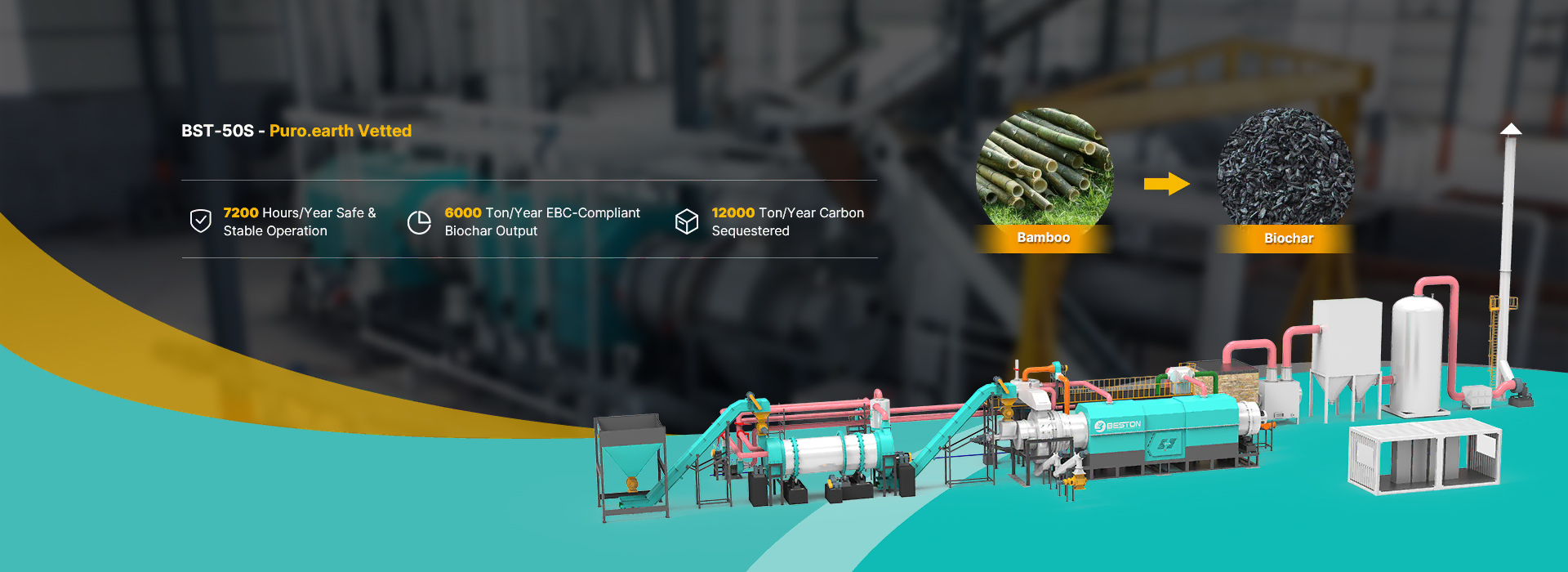
Bamboo charcoal making machine is designed to transform bamboo waste into charcoal using pyrolysis technology. The generated bamboo charcoal holds high economic value and boasts excellent environmental friendliness. Beston Group looks forward to collaborating with you to create business opportunities and contribute to sustainable development.
Bamboo: A Rapidly Renewable Resource for Charcoal Production
Bamboo grows rapidly, reaching harvest maturity in just 3–5 years, while most trees take 20–50 years. It can also regenerate from its roots, so there is no need to replant. Bamboo charcoal production promotes resource recycling and sustainable development. Available materials for bamboo charcoal machine:
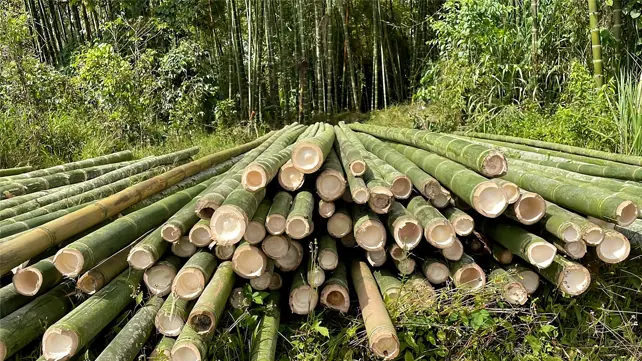
Mature Bamboo Harvested from Bamboo Forests
- Optimal bamboo age: generally 3–5 years.
- Advantages: intact bamboo culms and high carbonization efficiency.
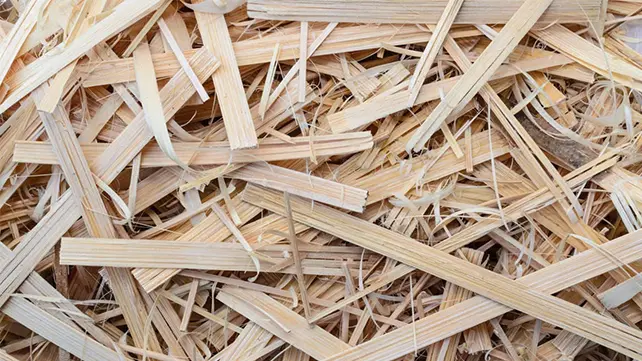
Residual Bamboo Waste from Processing
- Includes offcuts from bamboo furniture, bamboo handicrafts, and bamboo material processing.
- Advantages: low cost; promotes resource recycling and utilization.
Bamboo Charcoal Pyrolysis vs Kiln Firing: Cleaner and More Efficient Production
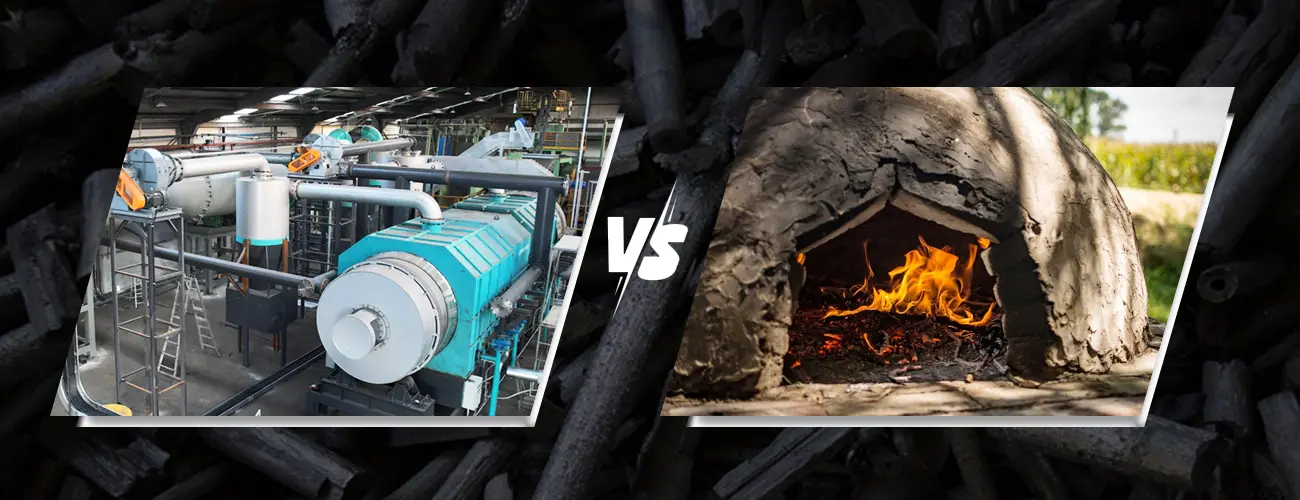
| Feature | Bamboo Charcoal Making Machine (Pyrolysis) | Kiln Firing |
|---|---|---|
| Suitable Users | Industrial-scale production | Rural or small-scale traditional bamboo charcoal producers |
| Biochar Yield | Over 30%, stable | About 20%, unstable |
| Charcoal Production Cycle | 6–10 hours | 20–30 days |
| Automation Level | High; accurate PLC control | Low; highly dependent on operator experience |
| Energy Utilization Efficiency | High — approximately 70–85% | Low — around 20–30% |
| Environmental Performance | Meet modern environmental standards | Produce heavy smoke and tar emissions, causing serious pollution. |
2 Models of Bamboo Charcoal Making Machine
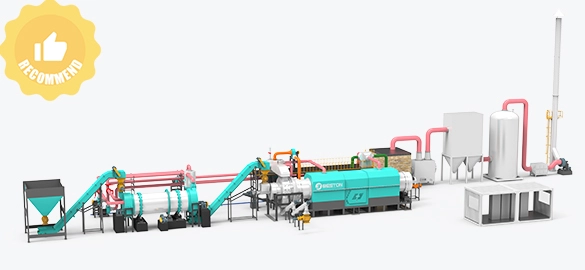
BST-50S Model
- BST-50S technology vetted by Puro.earth
- 6,000 tons biochar production annually
- 7200H/Y stable & safe operation
- 4 configuration options
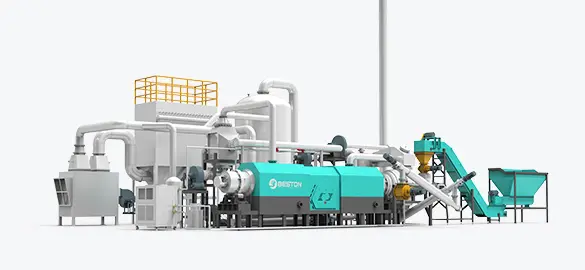
BST-06 Model
- 8000H/Y stable & safe operation
- Low-cost carbon removal process verification
- Small-scale test biochar machine
- 2 configuration options
| Model | BST-50 Standard | BST-50S LM | BST-50S HM | BST-50S MAX | BST-06 Standard | BST-06MAX |
|---|---|---|---|---|---|---|
| Time to Market | 2015 | 2022 | 2022 | 2022 | 2025 | 2025 |
| Operating Mode | Continuous | Continuous | Continuous | Continuous | Continuous | Continuous |
| Application | Commercial Scale | Commercial Scale | Commercial Scale | Commercial Scale | Testing | Testing |
| Dust Removal System | Standard | Advanced | Advanced | Advanced | Standard | Advanced |
| Feeding Capacity | 10-15m³/h | 10-15m³/h | 10-15m³/h | 10-15m³/h | 100-300KG/H | 100-300KG/H |
| Biochar Discharge Temperature | 45℃ | 45℃ | 45℃ | 45℃ | 45℃ | 45℃ |
| Puro.earth Authentication Model | × | √ | √ | √ | × | |
| Maximum Pyrolysis temperature | 650℃ | 650℃ | 650℃ | 850℃ | 650℃ | |
| Service Life | 5-8 years | 5-8 years | 5-8 years | 8-10 years | 5-8 years | |
| Annual Operating Time | 7200 hours | 7200 hours | 7200 hours | 7200 hours | 8000 hours | |
| Land Space Required (L*W*H*m) | 35m×15m×8m | 65m×15m×8m | 65m×15m×8m | 65m×15m×8m | 25m*18m*6m | |
| Total Power (KW) | 201.25kW | 453.35kW | 505.35kW | 505.35kW | 129.79 | 162.79 |
| Cooling Method | Recycling cooling Water | Industrial chiller | Industrial chiller | Industrial chiller | Recycling cooling Water | Industrial chiller |
| Installation Period (Calendar Days) | 50 | 70 | 70 | 70 | 45 | 50 |
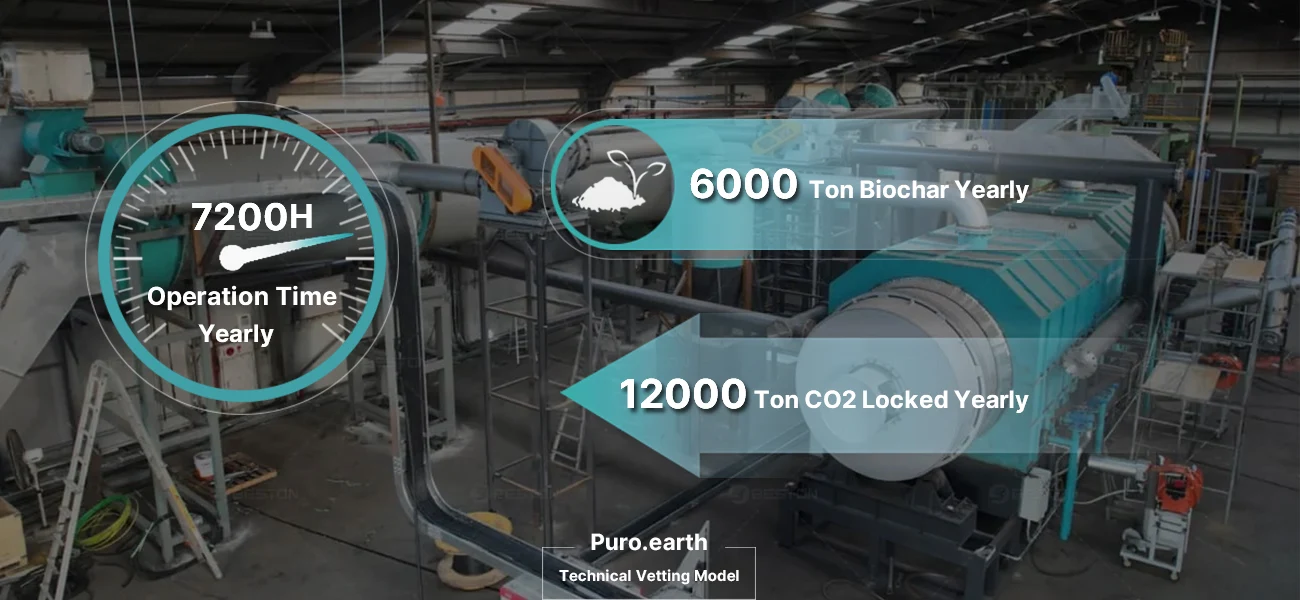
BST-50S Model Bamboo Charcoal Machine Passes Puro.earth Technical Vetting
The BST-50S can produce 6,000 tons of high-quality biochar annually, which can sequester 12,000 tons of CO2 when applied. The biochar pyrolysis technology employed in this bamboo charcoal making machine has passed Puro.earth’s technical vetting. This demonstrates its important role in global climate action and provides businesses and organizations with a practical carbon removal solution.
How to Make Charcoal from Bamboo? – Step by Step Workflow
01 Pretreatment
02 Feeding
03 Pyrolysis
Heat the reactor to high temperature. Inside the low-oxygen reactor, the bamboo undergoes thermal decomposition, producing carbon-rich charcoal.
- Phase 1: Drying Stage (around 150°C): Remove internal water of bamboo materials. No chemical composition change occurs.
- Phase 2: Endothermic Pyrolysis Stage (150-300 °C): Biomass begins to decompose, releasing gaseous products (CO, CO₂, H₂S, etc.). Chemical composition gradually changes.
- Phase 3: Carbonization Stage (300-600 °C): Polycondensation and thermal decomposition dominate. A significant amount of volatiles is released, leaving behind carbon-rich biochar.
04 Syngas Recycling
05 Cooling Discharging
Bamboo charcoal is discharged by a screw-type discharger and cooled via water-cooled heat exchange, ensuring outlet temperature ≤45°C.
06 Flue Gas Treatment
The residual heat from the flue gas is fully utilized:
- Part of it supplies energy for the dryer.
- Another part heats the syngas pipeline and dust collector to prevent condensation and blockage.
After heat recovery, flue gas passes through multi-stage dedusting to meet EU emission standards.
Bamboo Charcoal Laboratory Report: Quality & Performance Analysis
Report 1: Biochar Quality Evaluation – Compliance with EBC Standard
- Objective: Verify whether the bamboo biochar meets the European Biochar Certificate (EBC) standards, for use in Puro.earth technical vetting for the BST-50S model.
- Testing Institutions: Independent, authoritative third-party laboratories (one in Germany, one in China)
- Results: The biochar meets EBC standards for key indicators, including carbon content, heavy metals, and PAHs.

| Load capacity | EBC Standard | German Laboratory | Chinese Laboratory |
|---|---|---|---|
| H/C Molar Ratio | <0.4 – 0.7 | 0.45 (Generally Meets All Application Standards) | 0.11 – 0.32 |
| Heavy Metal | Depends on Specific Application | Fully Meet All | Fully Meet All |
| PAHS-8 | Depends on Specific Application | Fully Meet All | / |
| PAHS-16 | <6 mg/kg | Compliant with EBC-Feed, Urban, Basic Material Slightly above EBC Feed-Plus, Agro-Bio, Agro | 0.2 mg/kg |
Report 2: Bamboo Charcoal Performance Data
- Objective: Demonstrate the performance of bamboo charcoal and provide reference data for customer decision-making.
- Testing Institutions: An authorized third-party testing organization
- Results: The charcoal shows good potential as a renewable fuel. This demonstrates the advantages of Beston bamboo charcoal making machine.
| Results: | |
|---|---|
| NO | 1# |
| Kind | Bamboo |
| Total Moisture Mt% | 6.98 |
| Analytical Water Mad% | 1.74 |
| Dry Basis Ash Ad% | 16.62 |
| Volatile Matter on Dry Basis Vd% | 18.2 |
| Dry basis Fixed Carbon Fcad% | 63.44 |
| Sulfur Content on Dry Basis St.d% | 0.02 |
| Coking Characteristics 1-8CRC | 1 |
| High Calorific Value kcal/kg (dry basis) | 5679 |
| Low Calorific Value kcal/kg (dry basis) | 5171 |
| Remarks: **degrees Celsius Out of water and oil, the highest temperature **degrees Celsius The above data is for reference only. |
/ |
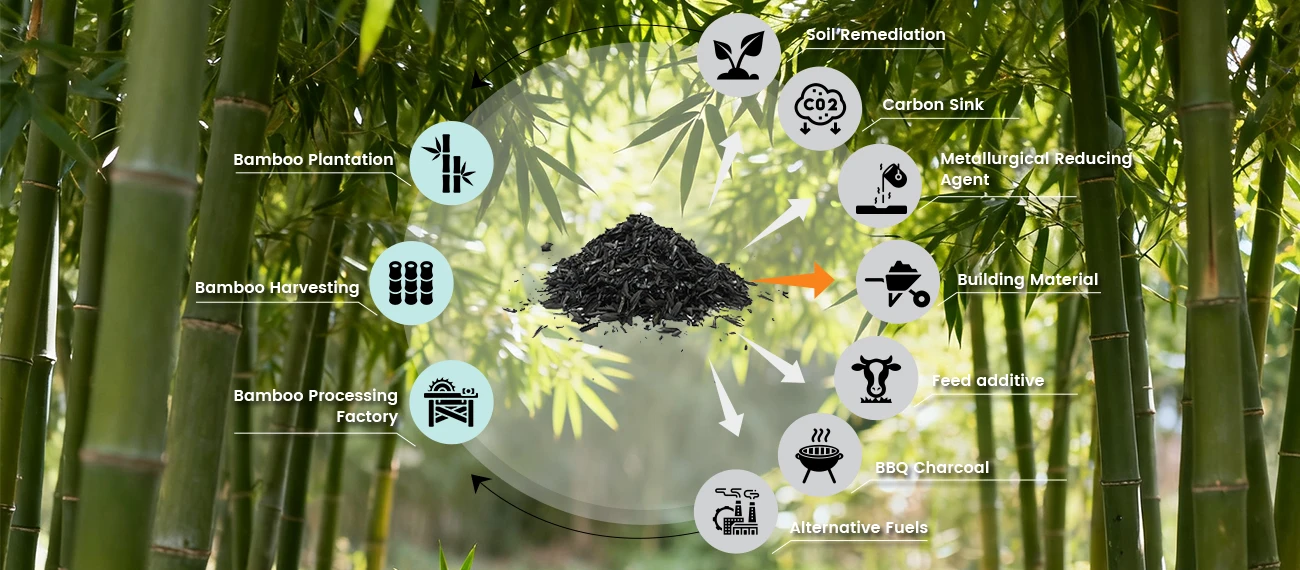
Key Applications of Bamboo Charcoal
BBQ Bamboo Charcoal
Bamboo charcoal is a healthy, safe, and eco-friendly choice for barbecues. It enhances the natural flavors of food while offering efficient cooking experience. Key benefits include:
- Long-lasting, stable burn
- Low smoke and odor-free
- Safe and non-toxic
- Subtle, sweet, and natural grassy flavor
Powerful Adsorbent
With natural porous structure and adsorption properties, bamboo charcoal excels at trapping pollutants and harmful substances. Its adsorption capacity is four times higher than regular charcoal, making it ideal for:
- Air and water purification
- Odor elimination
- Moisture absorption
- Mold prevention
Other Sustainable Applications
- Biochar Carbon Removal (BCR): Long-term carbon storage to combat climate change.
- Soil improvement: Enhance soil quality and promote sustainable agriculture.
- Metal smelting reducing agent: Replace traditional coke to promote low-carbon metallurgy.
- Animal feed additive: Reduce methane emissions from ruminants and support low-carbon stock farming.
Factory Testing: Actual Operation of Bamboo Charcoal Machine
Major Components Display of Bamboo Charcoal Making Machine
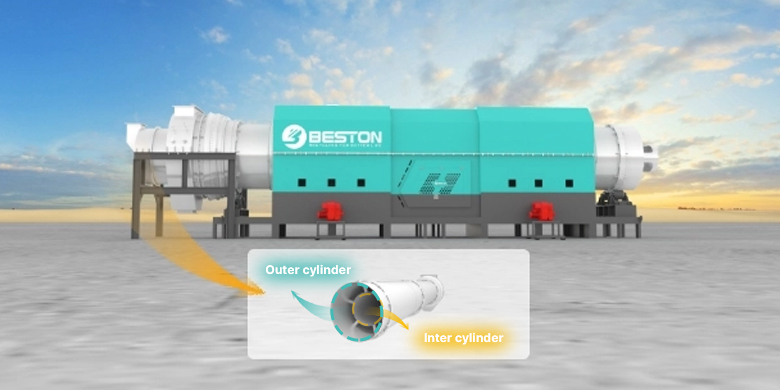
Biochar Reactor System – High-Efficiency Processing
The inner and outer double-cylinder structure ensures thorough carbonization and uniform reaction of the material.
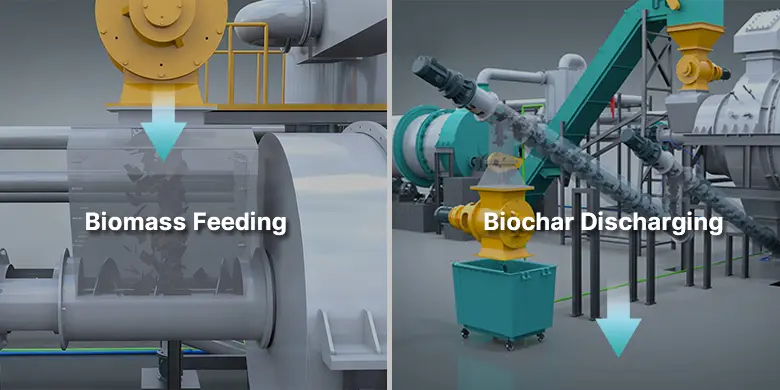
Sealed Feeding & Discharge System – Safety Protection
Prevents oxygen from entering, enabling fully sealed operation to ensure equipment and operator safety.
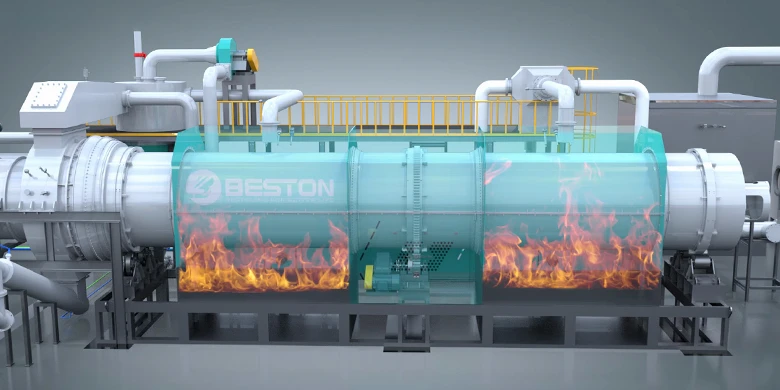
Sealed Combustion System – Complete Combustion
Ensures thorough burning of combustible gas, reduces carbon monoxide emissions, and improves thermal energy utilization.

Syngas Recycling System – Energy Recovery
Removes large dust particles from syngas and recycles the gas as fuel to improve energy efficiency.

Flue Gas Treatment System – Environmental Compliance
Effectively treats exhaust gas and performs cooling, desulfurization, dust removal, and deodorization to ensure emissions meet standards and protect the environment.

PLC System – Intelligent Control
Allows real-time monitoring and adjustment of temperature, pressure, and movement parameters via touch operation, enabling high automation.
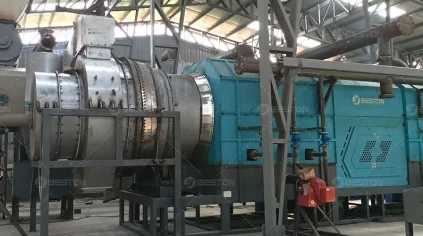
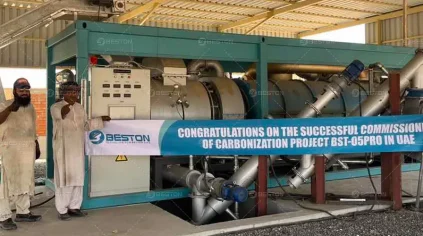
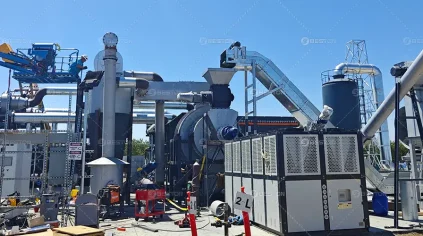
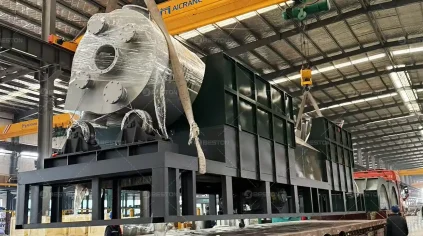
Global Cases of Bamboo Charcoal Machine: Versatility in Biomass Processing

Contact Us for More Information
Ready to turn biomass waste into value? Our bamboo charcoal making machine can process a variety of materials—bamboo, coconut shells, wood, and more. Reach out now to discover how this eco-friendly solution can boost your business and help you build a sustainable future! More daily news in Linkedin!