
🔄 Updated 2026-09-03
Tire pyrolysis has quietly become one of the more consequential stories in industrial materials. Every year, more than 1.8 billion tires reach the end of their road life worldwide, and the char left behind after they are thermally decomposed is no longer treated as waste — it is being refined into recovered carbon black (rCB), a filler that is reshaping how tire makers, rubber compounders, and specialty chemical producers think about circularity. What began as a niche substitute for virgin carbon black is now a fast-growing segment. This report walks through four pillars of the industry: basic properties, the price system, application scenarios, and the modification technologies that determine whether a given batch of rCB is landfill filler or automotive-grade reinforcement.
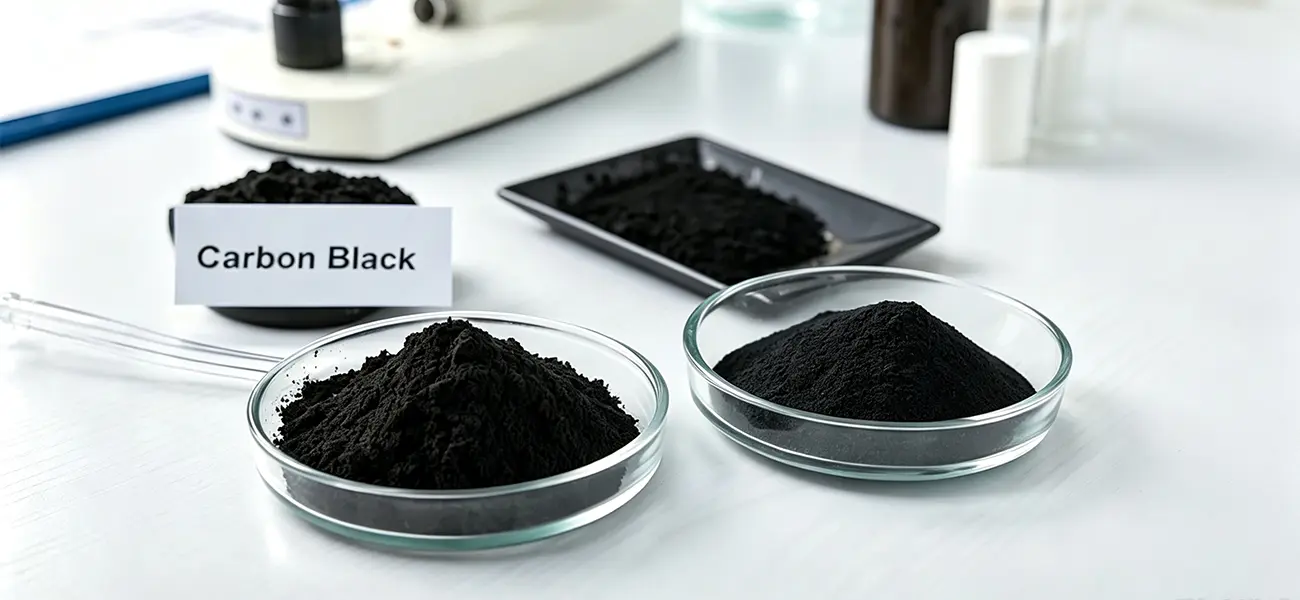
Basic Properties: Pyrolysis Carbon Black vs. Virgin Carbon Black
| Performance Indicators | Pyrolytic Carbon Black (Primary) | Pyrolytic Carbon Black (Refined) | Virgin Carbon Black (N330) | Virgin Carbon Black (N660) | Industry Standard (HG/T 4789-2014 Grade I) |
|---|---|---|---|---|---|
| Particle Size (nm) | 50-200 (Wide distribution) | 20-50 (Narrow distribution) | 30-40 | 40-50 | ≤80 |
| Specific Surface Area (BET, m²/g) | 60-120 | 100-150 | 110-130 | 70-90 | ≥80 |
| Ash Content (wt%) | 15-22 | 3-5 | ≤0.5 | ≤0.5 | ≤8 |
| Sulfur Content (wt%) | 0.5-3.0 | ≤0.3 | ≤0.3 | ≤0.3 | ≤1.0 |
| Volatile Matter (wt%) | 2-7 | 1-3 | ≤1.0 | ≤1.0 | ≤3.0 |
| DBP Absorption (cm³/100g) | 80-120 | 120-150 | 125-145 | 90-110 | ≥100 |
| Tensile Strength (Rubber Formula) | 6-10 MPa | 12-16 MPa | 18-22 MPa | 14-18 MPa | ≥12 MPa |
| Abrasion Resistance (Akron, cm³/1.61km) | 0.8-1.2 | 0.5-0.7 | 0.3-0.4 | 0.4-0.5 | ≤0.8 |
Based on tabular comparisons and current industrial-scale data, the advantages and limitations of tyre pyrolysis carbon black are as follows:
Core Advantages
- Cost Advantage: Raw material costs for pyrolytic carbon black (end-of-life tires at $250–$310/ton) account for about 40% of total production costs, while it account for about 60% for virgin carbon black (derived from petroleum feedstocks). The production cost of crude pyrolytic carbon black ($320–$470/ton) is only 40%–55% of that for virgin N330 ($830–$1,110/ton).
- Environmental Benefits: Compared with the production of virgin carbon black, each ton of pyrolysis carbon black recycles 3.0–3.5 tons of end-of-life tires, reduce CO₂ emissions by about 2.8 tons, and increase the solid waste resource utilization rate to more than 95%.
- Processing Compatibility: The thermal decomposition temperature of PCB (400–500°C) far exceeds the temperatures used in rubber vulcanization (140–180°C) and plastic processing (160–280°C). Thus, there is no risk of decomposition or gas evolution during PCB production.
Core Limitations
- High Impurities: Steel (5%–8%), fibers (1%–2%), and inorganic fillers (3%–5%) in scrap tires leave high ash residue (metal oxides/silicates). Batch reactors (70% of capacity) fluctuate by ±50 ℃, causing high sulfur content and fiber contamination.
- Batch Inconsistency: Variance in tensile strength (± 2MPa) and DBP absorption (±15 cm³/100g) forces frequent formula tweaks, cutting downstream efficiency by 10%–15%.
- Surface Defect: Low surface oxygen content (0.5–1.2 mmol/g) vs. (2.0–3.5 mmol/g) in oxidized virgin black) weakens matrix bonding, reducing tensile and tear strength by 20%–30%.
Price Benchmarking: From Crude Char to High-Purity rCB
| Product Grade | Specifications | Core Process | Price Range (USD/Ton) | Market Share |
|---|---|---|---|---|
| Crude Grade | Ash ≥18%, Sulfur ≥1.5% | No grinding | 80‑120 | 15% |
| Filler Grade | Ash 12%‑18%, Sulfur 1.0%‑1.5% | Simple grinding | 200‑280 | 65% |
| Refined Grade | Ash 5%‑10%, Sulfur 0.5%‑1.0% | Grinding + magnetic separation | 350‑500 | 12% |
| Modified Grade | Ash 3%‑5%, Sulfur ≤0.3% | Oxidation / coupling modification | 550‑850 | 6% |
| High‑end Grade | Ash ≤3%, Sulfur ≤0.2% | Graphitization / composite modification | 950‑1400 | 2% |
Key Drivers of Pyrolysis Carbon Black Market Growth
Supply Chain Sustainability
Global tyre giants (like Michelin and Continental) have committed to using 40% – 100% sustainable materials by 2030-2050. Recycled carbon black (rCB) has become a crucial resource in the supply chain.
Carbon Tax & ESG Compliance
Each ton of rCB produced diverts 3.5 tons of waste tires from landfills and offsets approximately 2.8 tons of CO2 emissions compared to virgin carbon black production—essential for green manufacturing.
Cost Optimization
rCB production costs are only 40% – 55% of virgin carbon black (vCB). While vCB relies on volatile petroleum-based feedstocks, tyre pyrolysis plant utilizes low-cost waste, decoupling your margins from crude oil fluctuations.
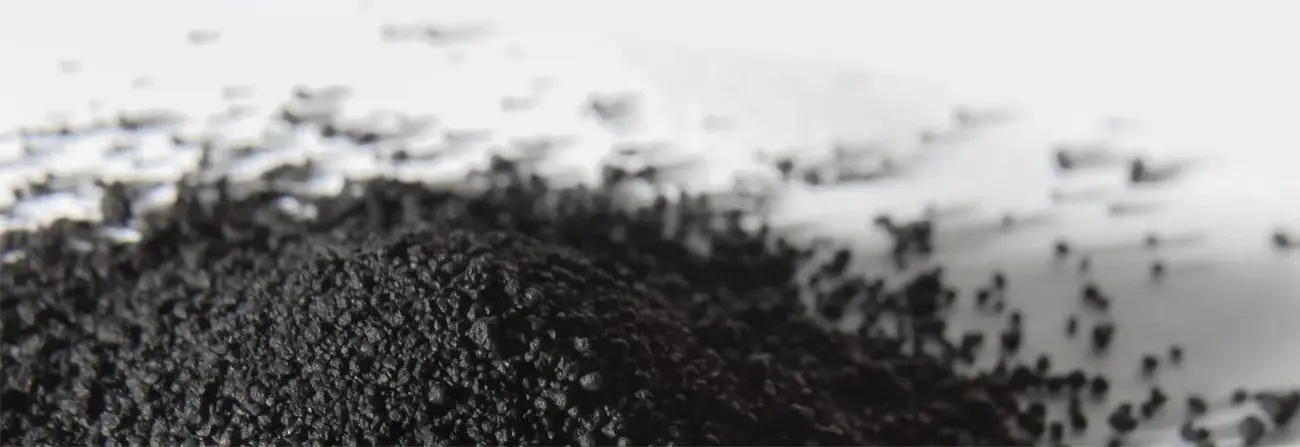
Commercial Application Scenarios of Pyrolysis Carbon Black
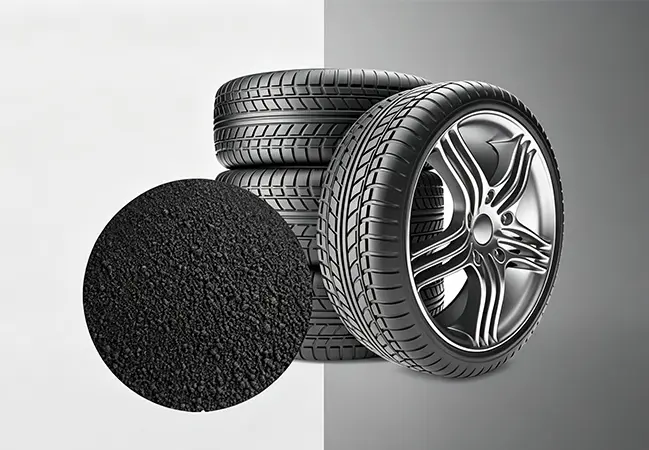
Rubber Industry (65% Market Share)
| Sub-segment | Product Types | rCB Property Requirements | Share (%) | Substitution Level | Cost Savings |
|---|---|---|---|---|---|
| Tire Manufacturing | Sidewalls, apex/ply skim, inner liner | Ash ≤ 5%, Sulfur ≤ 0.3%, high reinforcement | 25% | Modified grade replacing 30%–50% N550 | 15% – 20% |
| Reclaimed Rubber | Hoses, rubber sheets, sealing gaskets | Ash ≤ 15%, low cost | 30% | Filler grade direct usage | 30% – 40% |
| Conveyor Belts | General conveyor belt cover/core rubber | Ash ≤ 8%, moderate wear resistance | 8% | Refined grade replacing 40% N660 | 25% – 30% |
| Seals & Gaskets | General mechanical seals | Ash ≤ 5%, high dispersibility | 2% | Modified grade replacing 20% N330 | 10% – 15% |
Plastics Industry (20% Market Share)
- Black Masterbatch (60% of Plastics Demand): Filler/refined grade rCB is widely used in PP, PE, and PVC black masterbatches. It requires high color strength and uniform dispersion. At dosage levels of 5%–10%, it reduces masterbatch production costs by 20%–30%.
- Engineering Plastics Modification: Used in black PA, ABS, and PC components (e.g., automotive interiors, electronics housings). Requires modified grade rCB (Ash ≤ 3%) to improve weatherability and impact resistance. Added at 8%–15%, it reduces raw material costs by 30%–40% compared to virgin black.
- Agricultural Films & Pipes: Applied in standard PVC/PE agricultural films and drainage piping. Filler grade rCB provides UV resistance and coloration at dosage levels of 3%–8%, yielding over 50% cost savings versus virgin pigment grades.