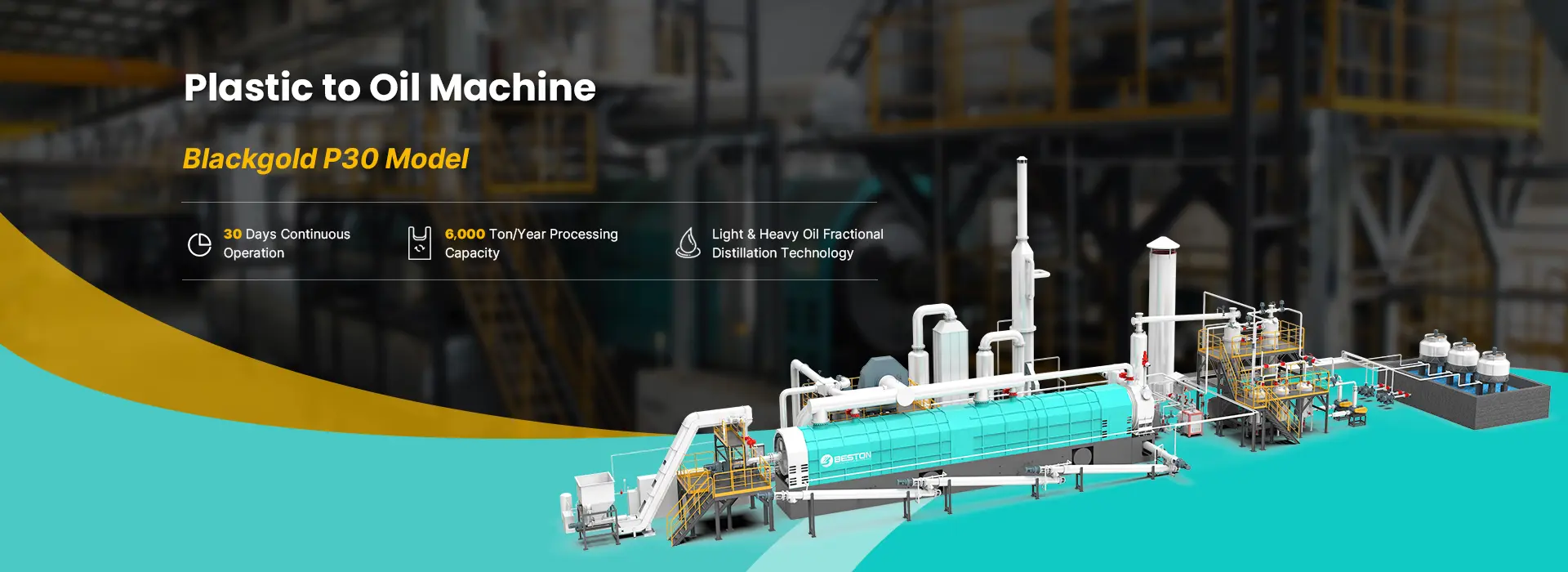
Plastic to oil machines use pyrolysis technology to convert waste plastics (PE, PP, PS, etc.) into usable oil. This offers a sustainable alternative to landfilling. These machines are available in various scales, from small batch systems to large, continuous industrial plants. They can handle 6,000 tons annually or smaller sizes. This solution benefits both sustainable economic development and environmental preservation.
Plastic to Oil Process: Step by Step Guide
01 Feeding
Feed plastic waste into the pyrolysis reactor via an airtight screw feeder or hydraulic ram. A nitrogen purging system displaces atmospheric oxygen inside the reactor to prevent combustion, ensuring thermal decomposition occurs instead of burning.
02 Preheating
Start the main reactor rotation and preheating. Wait for the main furnace to reach the desired temperature. The fuel can be diesel, natural gas, heavy oil or pyrolysis oil. To save fuel consumption, we design syngas recycling.
03 Catalytic Pyrolysis
When the main reactor’s temperature reaches about 100℃ after 2-3h, it begins to produce oil gas. The high-temperature flue gas generated during pyrolysis is heated in the jacket layer of the catalytic tower, and the oil gas passes through the catalytic tower.
04 Condensing
Then the high-temperature oil gas enters the vertical tube condenser, condenses into liquid oil, and enters the storage tank. Non-condensable pyrolysis gas enters the water seal and is recycled for reactor heating. The excess pyrolysis gas enters the exhaust chamber for burning out.
05 Discharging
Close the burners after the reaction. The main reactor and the draft fan still operate normally. After cooling, the slag can be discharged by auto screw discharger and water-cooling discharger.
06 Flue Gas Dedusting
The high-temperature flue gas from the catalytic tower mixes the high-temperature flue gas from the main reactor then enters the flue condenser for cooling treatment, and enters the spray tower for spraying dust removal, then discharged through the chimney to the atmosphere.
Catalytic Pyrolysis: Core Technology Advantage of Plastic to Oil
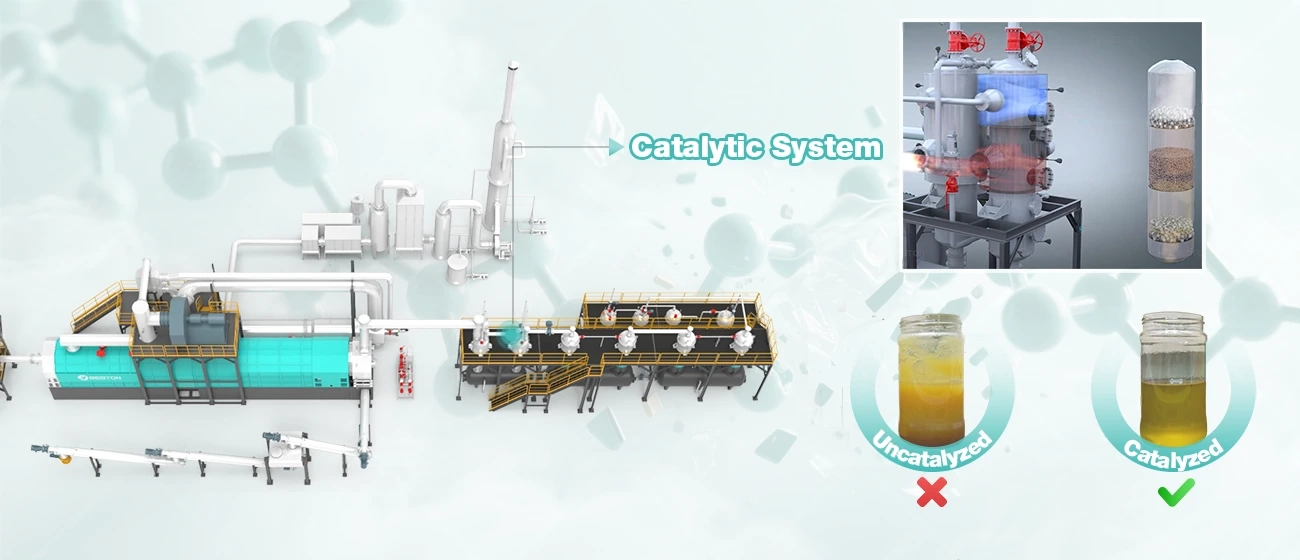
Improve Oil Quality – ISCC Certify
Using catalysts significantly reduces the wax content in the oil produced during the plastic pyrolysis process, resulting in a higher-quality end product. This means the oil is purer and performs better, making it suitable for a wider range of industrial applications.
Improve 200% Production Efficiency
With the reduction of wax in the pyrolysis oil, the risk of pipeline blockages is greatly minimized. This directly reduces downtime due to cleaning and maintenance, significantly lowering maintenance costs and improving operational efficiency.
Improve Operation Safety
Wax accumulation causes pipeline blockages and leads to increased internal pressure within plastic pyrolysis equipment, posing safety risks. Catalytic dewaxing prevents this from occurring, ensuring stable and safe operation of plastic to oil machine.
Plastic Types Analysis: Suitability for Pyrolysis and Oil Yield
| Types of Plastic | Applicability to Pyrolysis | Oil Yield (Lab Test) | |
|---|---|---|---|
 |
Polyethylene Terephthalate | × | low |
 |
High-Density Polyethylene | √ | 80%-95% |
 |
Polyvinyl Chloride | × | low and dangerous |
 |
Low-Density Polyethylene | √ | 80%-95% |
 |
Polypropylene | √ | 80%-90% |
 |
Polystyrene | √ | 80%-90% |
 |
Other Plastics without chlorine and oxygen | Plastics without chlorine and oxygen: √ Plastics with chlorine and oxygen: × |
/ |
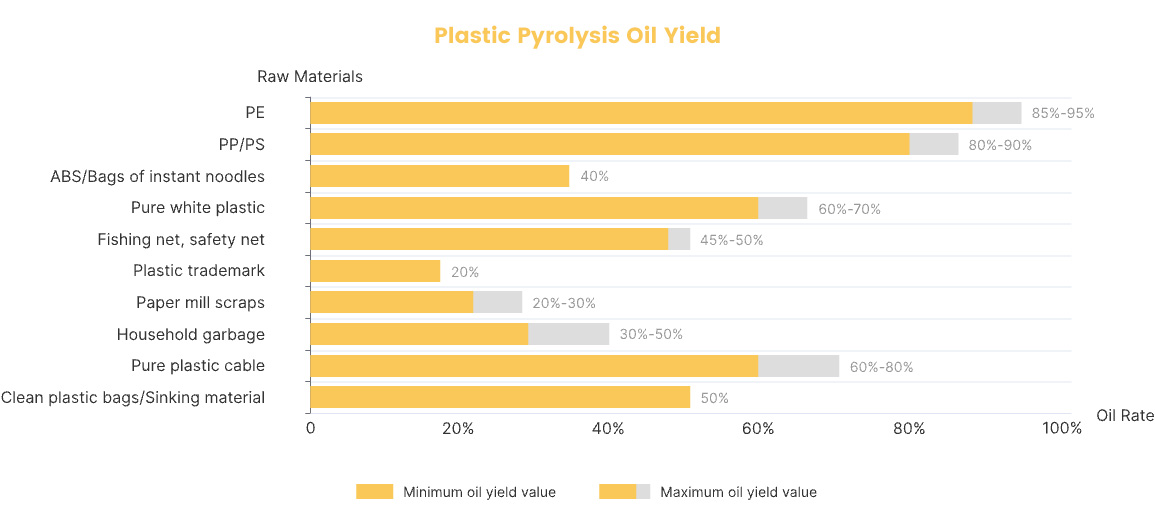
Laboratory Pyrolysis to Oil Test Reports
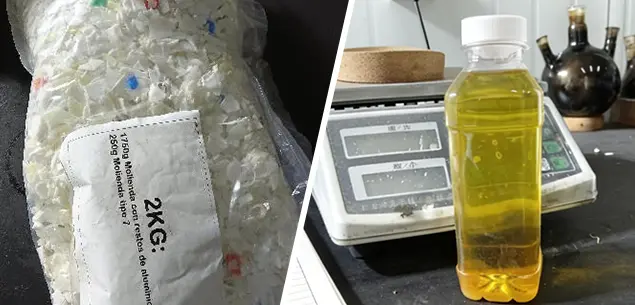
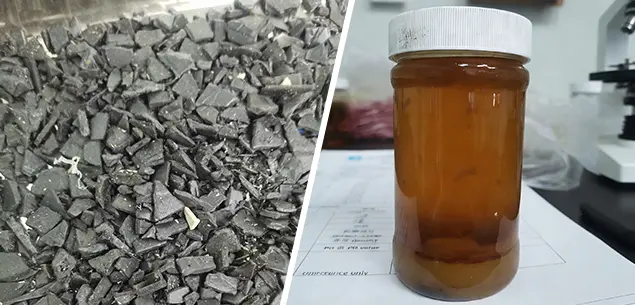
Between 2024 and 2025, different plastic samples were sent to Beston Group’s manufacturing base in Jiaozuo, China, for testing. In our laboratory, we conducted a series of experiments to determine the oil yield from various types of plastic waste, specifically focusing on HDPE, LDPE and PP. The pyrolysis reactions were performed under controlled conditions to simulate real-world applications, and the data collected is summarized below:
Data Interpretation and Analysis
The data suggests that HDPE provides the highest yield, with over 80% of the feedstock converted into oil. Polypropylene followed closely, with a yield of 75%, while polystyrene yielded the least, around 60%. The reason for these differences lies in the varying chemical bonds within the plastics, with HDPE and PP being more thermally stable and thus more readily converted into pyrolysis oil.
Expert Insights
Plastic pyrolysis is a rapidly developing field, and ongoing research continues to refine the conditions for optimal yield. These laboratory results align with existing studies in the field, which have shown similar yields for HDPE and PP under comparable conditions. By optimizing the pyrolysis process, it is possible to increase the yield further, improving the efficiency of plastic waste recycling.