
🔄 Updated 2026-04-20
In the global field of biomass resource utilization, biochar demonstrates remarkable “situational adaptability.” Ranging from the decentralized waste management of remote forest regions to large-scale, industrialized carbon removal projects, a single technological model is no longer sufficient to meet diverse commercial demands. This trend is driving the evolution of biochar production equipment toward greater differentiation and specialization. This article introduces the mainstream commercial biochar production equipment currently available on the market, examined across four key dimensions, to assist industry practitioners in selecting the equipment best suited to their specific needs.
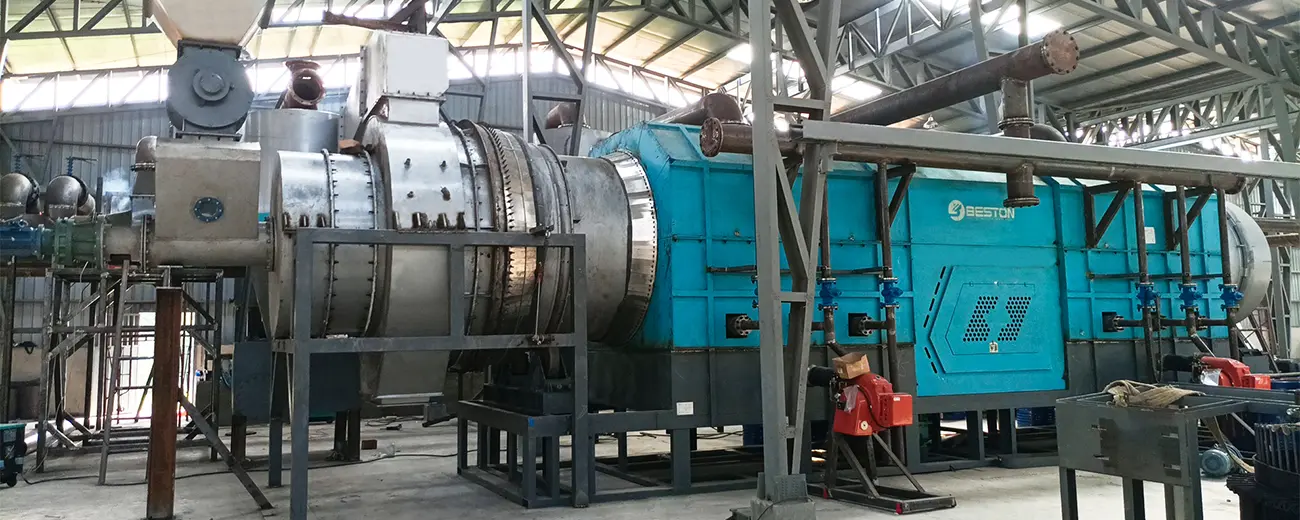
Classification by Biochar Production Process
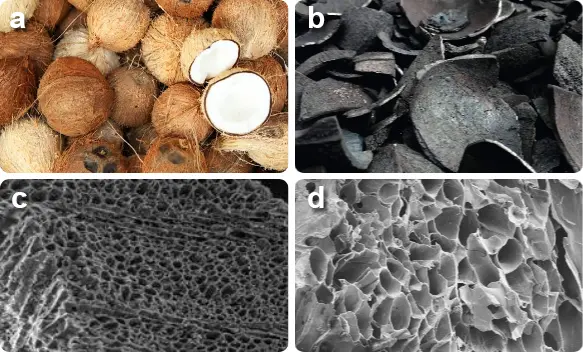
Slow Pyrolysis
Slow pyrolysis now is the most technologically mature and widely adopted commercial dry-process pathway in the global biochar industry.
- Technical Features: Low to medium temperature (350–600°C), low heating rate, long residence time (30 mins to several hours)
- Biochar Properties: High yield (25%–35% of dry feedstock), intact carbon framework, high porosity, low , and exceptional chemical stability.
- Biochar Application Value: Primarily utilized for the production of high-quality agricultural biochar and for long-term carbon sequestration.
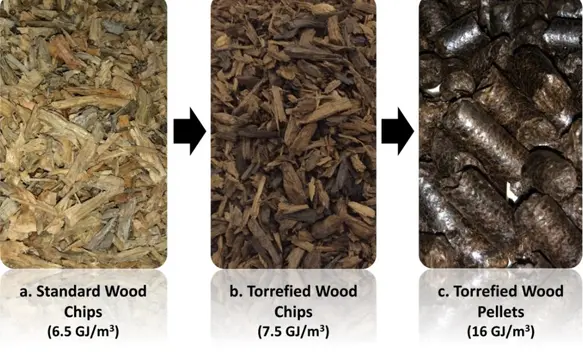
Torrefaction
Torrefaction is mild pyrolysis of biomass, aimed at improving fuel quality, energy density, and storage and transport efficiency.
- Technical Conditions: Low temperature (200–300°C), oxygen‑deficient / oxygen‑free atmosphere, low heating rate (<50°C/min)
- Biochar Properties: High energy density and calorific value; retains >90% of feedstock energy; goog grindability and hydrophobicity
- Biochar Application Value: Primarily used for co-firing in coal-fired power plants and as a sustainable alternative fuel for industrial boilers.
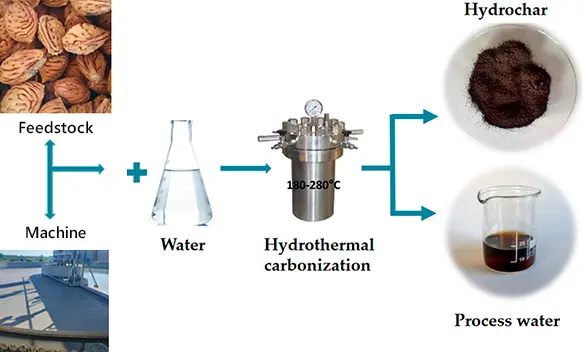
Hydrothermal Carbonization (HTC)
Hydrothermal carbonization is unaffected by high feedstock moisture content, making it ideal for treating high-moisture wastes such as sewage sludge, food waste and algae.
- Technical Features: Reaction temperature 180–250°C, water as reaction medium, saturated steam pressure of 2–4 MPa in a sealed reactor
- Hydrochar Properties: Abundant oxygen-containing functional groups (hydroxyl, carboxyl, etc.) and excellent cation exchange capacity (CEC)
- Hydrochar Application Value: Demonstrates outstanding performance in heavy metal adsorption, the production of specialty fertilizers, and as a green substitute for industrial fuels.
Other Pathways
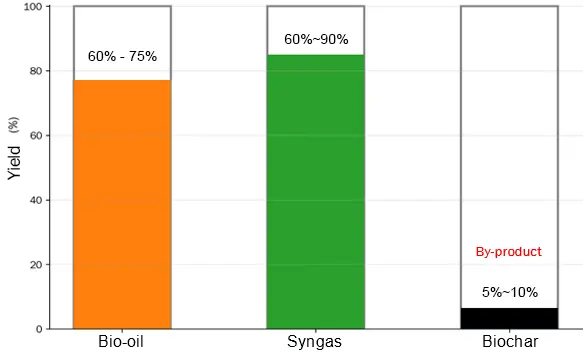
Fast pyrolysis and gasification also produce small amounts of biochar, but biochar is not as the target product.
These processes focus on maximizing bio-oil or syngas production, using extremely high heating rates or high temperatures above 700°C.
Under such conditions, biochar yield is very low (typically only 5%–10%). Due to intense reaction conditions, the resulting biochar has poor pore structure and low chemical stability, failing to meet commercial biochar application standards. Thus, these are not regarded as mainstream routes for dedicated biochar production.
Classification by Operation Mode: Continuous vs. Batch
Continuous Biochar Production Machine
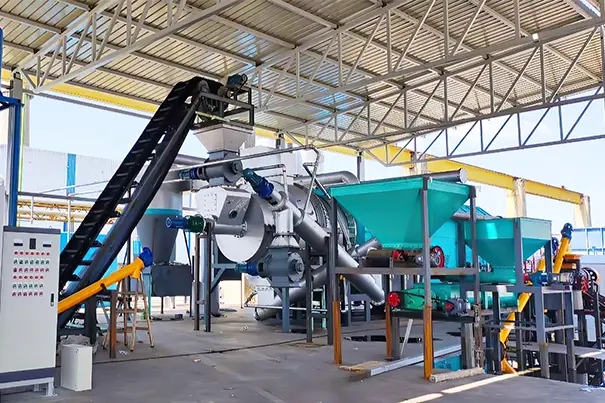
- Operation Mode: Continuous feeding and discharging, with raw materials passing through the reactor at a constant speed without shutdown.
- Core Advantages: 24-hour continuous operation, precise temperature control via PLC, consistent product quality.
- Market Position: A prerequisite for high-end carbon credits, supports carbon footprint traceability, suitable for large-scale production.
Batch Biochar Production Machine
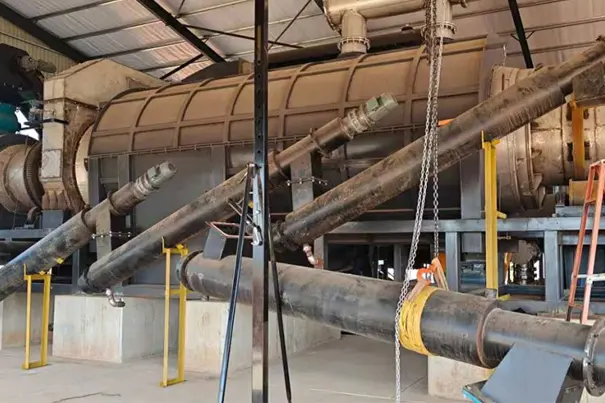
- Operation Mode: Single-cycle operation including “charging – heating – carbonization – cooling – discharging”, with a cycle time of 8–12 hours per batch.
- Core Features: Simple structure and low investment; high heat loss, uneven carbonization, and difficult syngas recovery.
- Market Position: Gradually being replaced by continuous systems due to stricter environmental policies.
Classification by Deployment: Fixed vs. Mobile
Stationary Biochar Plant
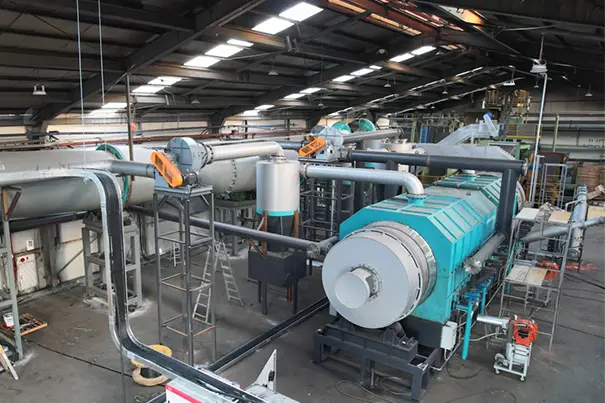
Stationary biochar plants are typically large-scale, deployed in industrial parks to act as regional hubs for resource recovery.
- Deployment Features: Permanent civil foundation, large silos, and complete utilities (water, electricity, gas)
- Relocation Frequency: Non‑movable (usually 5–10 years service life)
- Economies of Scale: Single-line annual biochar output generally over 3,000 tons, achieving optimal OPEX per ton of biochar
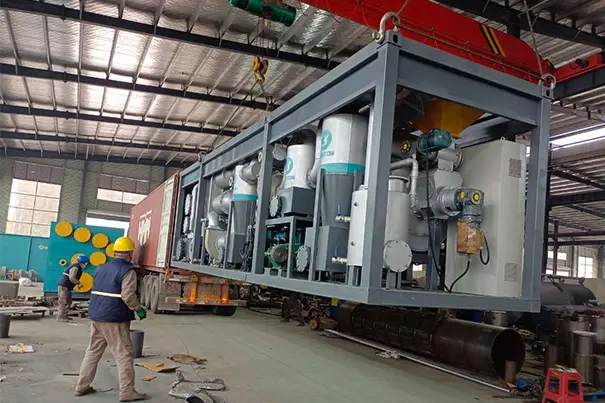
Skid-Mounted Biochar Machine
Suitable for quickly verifying the feasibility of CDR (Carbon Dioxide Removal) business models.
- Deployment Features: Mounted on a teel skid, sized to fit standard containers. Only simple on-site ground hardening and pipeline connection required
- Relocation Frequency: Low frequency (annual basis)
- Rapid Deployment: Over 90% of assembly and commissioning is completed in-factory, reducing 70% on-site installation cycle.
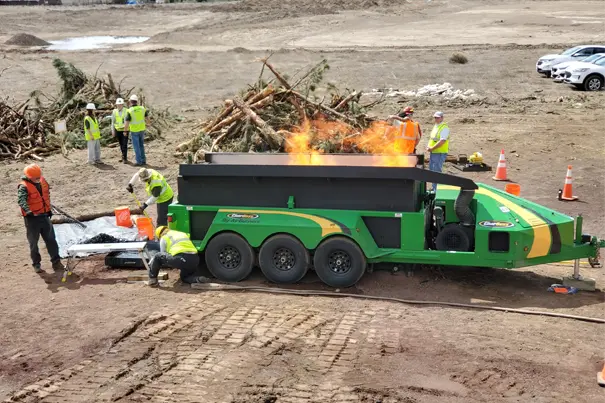
Vehicle-mounted Biochar Machine
For highly dispersed feedstocks, mobile biochar machine follow the principle of feedstock stays, equipment moves.
- Deployment Features: Integrated on truck chassis, trailers or wheeled bases, with extremely high mobility
- Relocation Frequency: High frequency (daily / weekly basis)
- Minimal Logistics: Pyrolysis completed directly in fields or at forest edges, greatly cutting freight costs
- Simplified Permitting: In many regions, classified as “mobile agricultural machinery” or “temporary treatment facilities”, with simpler EIA and construction approval procedures
Classification by Biochar Production Scale
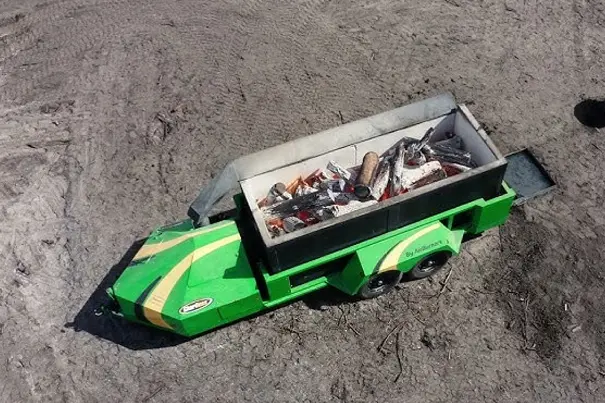
Small-scale Equipment
- Processing Capacity: Minimal to moderate daily throughput (typically under 5-10 tons)
- Investment Cost: Several hundred thousand dollars
- Target Users: Agri-tech startups, small-scale farmers, Universities, research institutes, corporate R&D centers
- Purpose: Verify process parameters, test yield and biochar quality with different feedstocks. Validate local project profitability or conduct on-site distributed biomass treatment
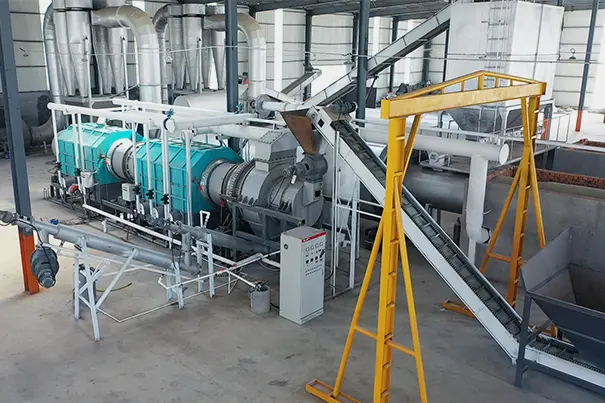
Large-scale Industrial Production Line
- Processing Capacity: High-volume throughput (exceeding 10 or 20 tons per day) via single line or multiple parallel lines.
- Investment Cost: ranging from several million to tens of millions of US dollars
- Target Users: Government demonstration projects, carbon asset management companies, large wood processing bases, paper-making groups, etc.
- Purpose: Large-scale carbon sink trading, industrial upgrading and circular economy projects
Industry Insights: Core Metrics for Equipment Selection in 2026
In the current context of carbon neutrality, the selection of biochar production equipment is no longer based solely on processing capacity; rather, the primary focus has shifted to how best to meet carbon credit trading standards.
Carbon Stability (H/Corg ratio)
For biochar produced by high-quality equipment, the H/Corg ratio shall be less than 0.7, which is the core threshold for certification by the European Biochar Certificate (EBC) and the International Biochar Initiative (IBI).
Data Traceability
Modern biochar equipment shall be integrated with a digital MRV (Measurement, Reporting, Verification) system to provide accurate Life Cycle Assessment (LCA) data. Such data is the sole basis for issuing Carbon Credit, and equipment lacking data support will lose the space for financial premium.
In the 2026 market landscape, large-scale continuous industrial pyrolysis equipment—characterized by high stability and digital tracking—is no longer just a production tool. It has become a “Global Passport” for enterprises to engage in international carbon trading and realize green premiums.