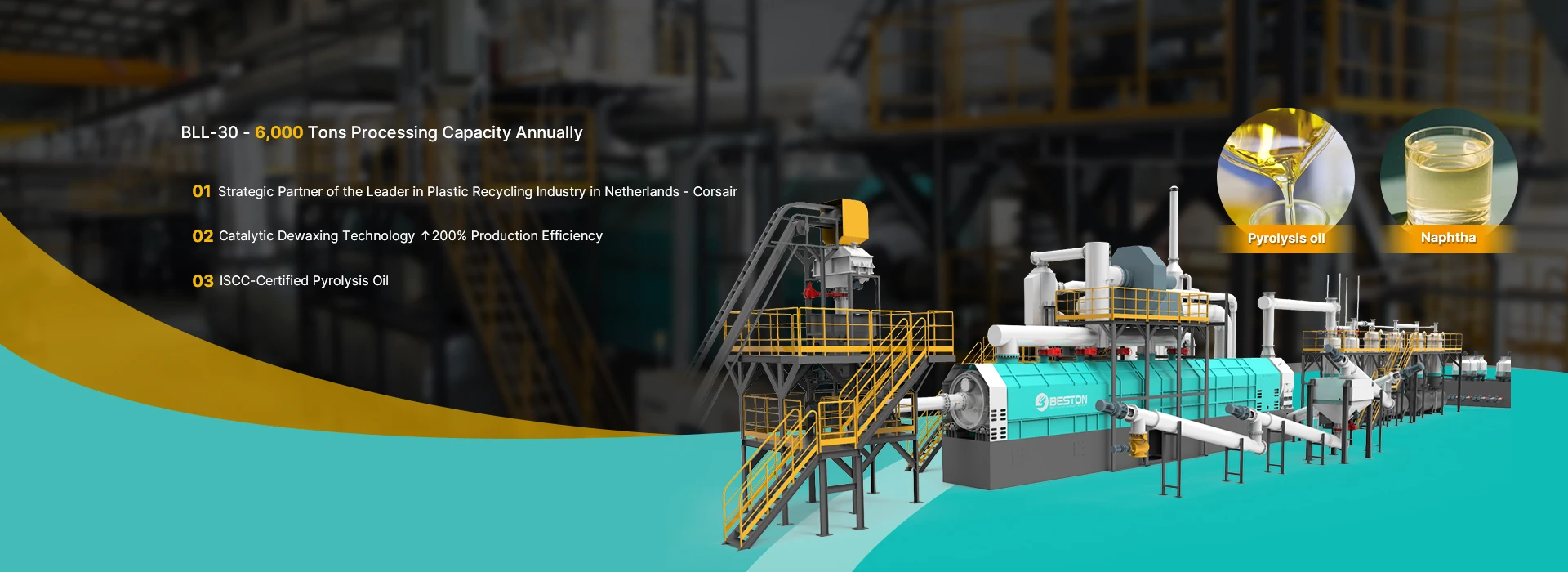
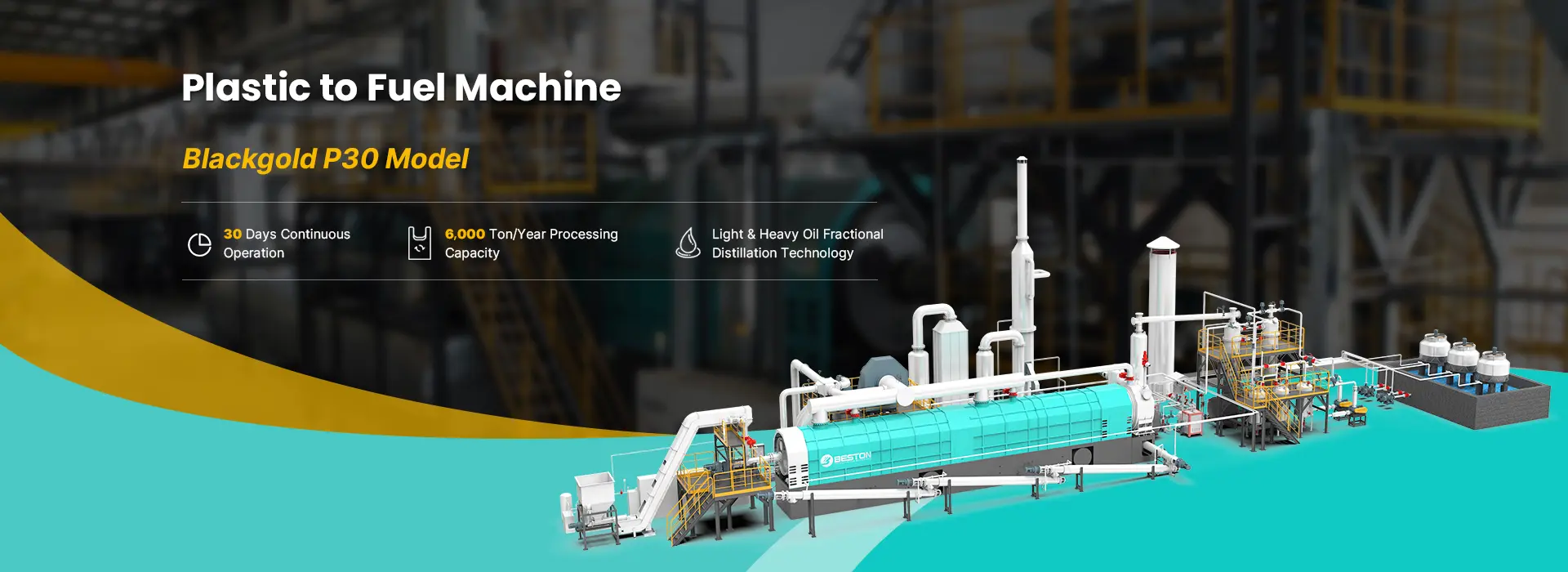
Plastic to fuel machine offers an eco-friendly alternative fuel solution through advanced catalytic pyrolysis technology. It annually handles up to 6000 tons of plastic waste. This creates great economic and environmental benefits. As a pioneer in plastic pyrolysis to fuel technology, Beston Group offers ideal solutions for investors. Please read on for more.
Catalytic Pyrolysis Technology: Key to Turning Plastic into Fuel
Plastic to fuel process can often encounter waxy oil clogging in pipes. Beston Group has developed an advanced catalytic pyrolysis technology to address this issue. It brings long-term value, making your investment worthwhile.
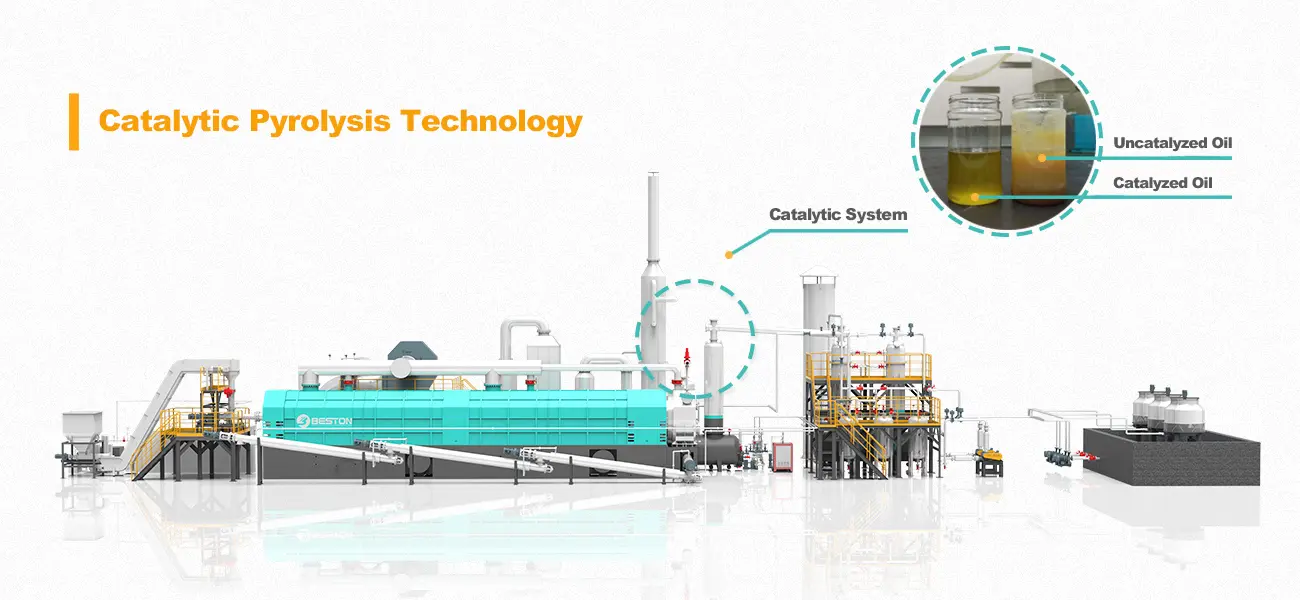
200% Efficiency Increase
This technology prevents wax oil deposits from clogging pipes. It ensures smooth operation of the plastic pyrolysis plant and reduces maintenance needs.
ISCC Certified Oil Production
100% liquefying wax oil maximizes the quality of plastic pyrolysis oil, meeting higher industrial and market standards. The final pyrolysis oil complies with ISCC certification.
Operational Safety Increase
The technology reduces risks associated with pressure buildup caused by wax-clogged pipes in the machine. It enhances the safety of equipment and workers during operations.
Parameters of Plastic into Fuel Machine for Sale
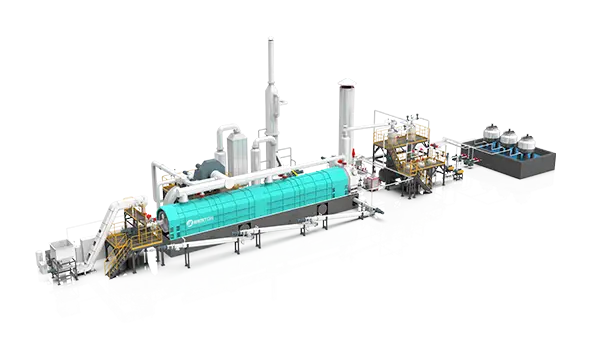
Continuous Type: Blackgold P30
- Process 6,000 tons of plastic waste annually
- 30-day continuous pyrolysis operation
- High automation: 4 operators required
- Get light oil & non-standard diesel
- Policy support and incentives
- Easy to get environmental compliance and approval

Blackgold P30
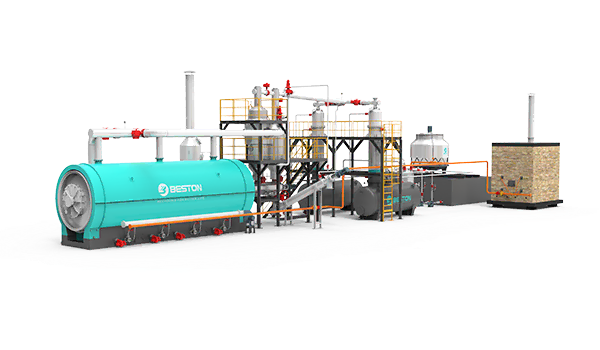
BLJ-20
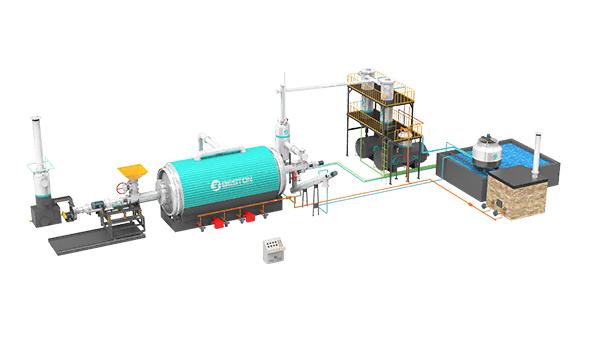
BLJ-16
| Model | Blackgold P30 | BLJ-20 | BLJ-16 Standard | BLJ-16 WAX | BLJ-16 CAT | BLJ-16 ULTRA |
|---|---|---|---|---|---|---|
| Manufacturer | BESTON | BESTON | BESTON | BESTON | BESTON | BESTON |
| Time to Market | 2026 | 2025 | 2013 | 2022 | 2022 | 2022 |
| Motor Brand | Chinese brand | Chinese brand | Chinese brand | Chinese brand | Chinese brand | ABB Explosion-proof |
| Suitable Raw Materials | Waste plastics; Tires; Oil sludge | Waste plastics; Tires; Oil sludge | Whole tire<120cm; Tire blocks<15cm; Oil soil with liquid content<30% | Waste plastic bales (Max.0.9*0.9*1.6m) | Waste plastic bales (Max.0.9*0.9*1.6m) | Waste plastics; Tires; Oil sludge |
| Input Capacity (Max.) | Waste plastic pellets: 0.8-1.05t/h; Rubber powder: 1.25-1.5t/h; Oil sludge:1.8-2.3t/h | Waste plastic pellets: 12-13t/d; Tire: 18-20t/d; Oil sludge:20-25t/d | Whole tire <120cm or Tire blocks<15cm: 10-12t/batch; Sidewall removed tire: 15-16t/batch; Oil soil: 16-18t/batch | 8-10t/batch | 8-10t/batch | Waste plastic bales: 8-10t/batch; Whole tire <120cm or Tire blocks<15cm: 10-12t/batch; Sidewall removed tire: 15-16t/batch; Oil sludge: 16-18t/batch |
| Working Method | Fully Continuous | Batch | Batch | Batch | Batch | Batch |
| Final Oil Quality | Pyrolysis oil; Pyrolysis oil with wax or light oil; Gasoline blending components | Pyrolysis oil; Light oil and non-standard diesel | Pyrolysis oil | Pyrolysis oil with wax | Pyrolysis oil with light oil | Pyrolysis oil; Pyrolysis oil with wax or light oil |
| Reactor Material | 304/310S Stainless steel | Q345R Boiler steel and 304/316L/310S Stainless steel | Q345R Boiler steel | 304 Stainless steel | 304 Stainless steel | 304 Stainless steel |
| Reactor Life Span (Years) | 5-8 Years | Q345R Boiler steel: 2-3 Years; 304/316L Stainless steel: 5-8 Years; 310S Stainless steel: 8-10 Years | 2-3 Years | 5-8 Years | 5-8 Years | 5-8 Years |
| Guarantee (Months) | 12 | 12 | 12 | 12 | 12 | 12 |
| Delivery Time (Calendar Days) | 60-90 | 60 | 45 | 60 | 60 | 90 |
| Land Space Required (L*W*H*m) | 50*20*10 | 40*13*8 | 33*13*8 | 33*13*8 | 33*13*8 | 33*26*8 |
| Packing | 20*6*3m in bulk+13*40HQ | 1*40FR+4*40HQ | 1*40FR+3*40HQ | 1*40FR+3*40HQ | 1*40FR+3*40HQ+1*20GP | 1*40FR+8*40HQ |
| Installation Period (Calendar Days) | 60-90 | 45 | 45 | 45 | 45 | 60 |
Blackgold P30 Plastic to Fuel Machine: 5 Key Technical Breakthroughs

Smart Wax Oil Recovery System
Wax oil liquefaction technology combined with a self-cleaning system resolves condenser clogging issues, reduces unplanned shutdowns, and cuts operating costs.
Mechanical Decoking Design
Mechanical gravity-friction technology and a hot-air uniform heating design minimize coking, reduce the frequency of shutdowns, and ensure continuous equipment operation for 720 hours.
Light & Heavy Oil Fractional Distillation System
Advanced oil-gas spray technology enables direct separation of light oil and non-standard diesel, thereby saving the process investment of distillation equipment. The light oil can be refined into high-value naphtha.
High Automatic System
Blackgold P30 employs automatic temperature control technology (accuracy ±10°C), an automatic weighing feed system, and an automatic staged condensation system, reducing manual intervention and improving production efficiency by 60%.
Self-adjusting Sealing Technology
Self-adjusting mechanical design dynamically adapts to varying thermal deformation. Combined with a nitrogen purge/blanketing system, it ensures safe and stable continuous operation, featuring a dynamic seal pressure rating of 3 kPa.
BLJ-20 Plastic to Fuel Machine: 3 Key Technical Breakthroughs

One Step to Get Light Oil & Non-standard Diesel
Fractional distillation technology efficiently converts waste plastics into high-value oil products and saves distillation investment.
- Light oil is extracted at temperatures below 200°C.
- Non-standard diesel is produced at temperatures above 200°C.
50% Higher Processing Capacity
The BLJ-20 reactor has been enlarged in both diameter and length to achieve higher capacity. Key specifications are as follows:
- Reactor size: Ø2800 × 10000 mm
- Daily capacity: 12–13 tons of waste plastic
- Annual capacity: ≈4,000 tons
High Safety Factor
The BLJ-20 system integrates thermal dynamic sealing and flexible high-temperature insulation technologies, ensuring:
- Excellent sealing with no oil-gas leakage
- No open flames during operation
- Comfortable and safe working conditions
Global Cooperation in Plastic-to-Fuel Project Cases

Install Plastic to Fuel Machine in the Netherlands
Project time: from 2022;
Configuration: 4 sets of standard configuration + PLC control system + high-end dedusting system;
Raw materials: household plastic waste;
Pyrolysis oil use: marine fuel & distillatory refining.

Install BLJ-16 Plastic into Fuel Machine in Malaysia
Project time: from 2024;
Configuration: 3 sets of BLJ-16 standard configuration + high-end exhaust gas dedusting system;
Raw material: medical waste plastics and oil sludge;
Pyrolysis oil use: as fuel for incineration equipment.

Ship 2 Sets of BLJ-16 Plastic into Fuel Machines to South Africa
Project time: from 2023;
Configuration: 2 sets of BLJ-16 standard configuration + PLC control system + high-end dedusting system;
Raw materials: waste plastics and tires;
Pyrolysis oil use: furnace fuel
What Plastic Types Suit for Pyrolysis to Fuel Recycling?
When plastic to fuel pyrolysis, it’s crucial to select the right types of plastics for effective processing. Sample testing can be offered to assess whether your plastic is suitable for pyrolysis conversion. Just send us intact, leak-proof plastic samples.

Recommended Waste Plastic – PE/PP/PS
Fuel oil yield: More than 80%
Better oil quality: They contain fewer heteroatoms (non-carbon and non-hydrogen atoms), which means there are fewer impurities in the material that can hinder the oil production process.
Unacceptable Waste Plastic – PET/PVC
Fuel oil yield: very low
Safety Risks: PET pyrolysis releases oxygen that poses safety risks for machines and workers.
Toxic Emissions: PVC pyrolysis releases hydrogen chloride, which can corrode pipes and equipment. PVC fuel oil burning will release carcinogenic dioxins.
How Can Plastic Pyrolysis Oil Be Used as Fuel?

Non-Standard Diesel
Non-standard diesel shares certain properties with diesel, such as distillation range, density, and heating value. Typical applications include:
- Heavy-Duty Generator Sets: Used as an alternative fuel for industrial power generation.
- Off-Road Machinery: Applied in construction equipment, agricultural machinery, and marine engines that have relatively flexible fuel requirements.
- Industrial Fuel: Used as a fuel source for boilers, furnaces, and heating applications.
Light Oil
Light oil is the low-boiling component of plastic pyrolysis oil. Its properties are similar to naphtha-range hydrocarbons. Main applications include:
- Industrial Fuel: As a fuel in industrial furnaces, boilers, and kilns.
- Petrochemical Feedstock (more widely used than for fuel purposes): Upgraded into naphtha and then used as a feedstock to produce ethylene and propylene.
- Solvent Use: Sometimes used as a diluent or solvent component in industrial processes.
Gasoline Blending Components Produced from Pyrolysis Gas
This gasoline-range fraction is recovered from surplus pyrolysis gas and contains approximately 65% aromatic hydrocarbons, giving it a high octane value.
It is primarily used for blending commercial gasoline to boost its octane rating.
How to Convert Plastic to Fuel?
01 Plastic Preparation
A dryer and crusher initially process large plastic into the appropriate size and moisture content. For special plastic to oil machine models with different feeding methods, feeding requirements for materials are as follows:
| Machine Model | Manual Feeding | Hydraulic Feeding | Screw Feeding |
|---|---|---|---|
| BLJ-16 | less than 1.2m | less than 1.2m | less than 5cm |
| Blackgold P30 | not applicable | less than 2cm | less than 2cm |
02 Plastic Feeding
03 Oil Gas Production – Plastic Catalytic Pyrolysis Reaction
- Start the combustion chamber to heat the reactor;
- 100℃-180℃: Oil gas begins to appear;
- 280℃-350℃: Large amounts of oil gas appear;
- Oil gas containing wax oil components enters the catalytic tower for dewaxing and separation of light gas and heavy gas;
- Light oil gas exits from the top of the catalytic tower and enters the vertical condenser;
- Heavy oil gas drops down into the bottom spiral, where it is pushed back into the main reactor for further pyrolysis.
04 Oil Gas Condensation
05 Solid Residue Discharge
06 Combustible Gas & Exhaust Gas Treatment
- Non-condensable combustible gas enters the water seal. After purification, the gas enters the combustor to provide heat energy for the reactor pyrolysis reaction. Excess combustible gas is burned in the exhaust chamber to ensure safety and environmental friendliness.
- The high-temperature exhaust gas first passes through the specific condenser to cool down. Then it undergoes multiple dedusting treatments. You can choose a high-end exhaust gas treatment system so that the final emissions can meet EU standards.
Estimated Fuel Oil Yields from Different Plastic

Plastic Fuel Oil Quality: Test Report for Reference

Physical Properties
- Density: At 20°C, the density is 0.7783 g/cm³, indicating that the pyrolysis oil is relatively light.
- Kinematic Viscosity: The kinematic viscosity at 40°C is 1.638 mm²/s, suggesting good fluidity at higher temperatures.
- Flash Point: The flash point is below 65°C, meaning the oil is flammable at room temperature, necessitating careful handling and storage.
- Pour Point: The pour point is -17°C, demonstrating good fluidity in low-temperature environments.
Thermal Properties
- Heating Value: The total heating value is 43.385 MJ/kg, indicating a relatively high energy density, making it suitable for energy recovery and utilization.
- Initial Boiling Point and Boiling Range: The initial boiling point is 53.2°C, with a boiling range extending to 223.1°C, indicating that the pyrolysis oil contains a variety of compounds suitable for further distillation and refining.
Chemical Composition
- Acid Value: Less than 0.1 mg KOH/g suggests that the acidity is very low, which may reduce corrosion potential for equipment.
- Impurities: The levels of heavy metals (such as lead, mercury, cadmium, and zinc) are very low, reflecting the high purity of the product.
Overall, this report on plastic fuel oil indicates that the oil possesses favorable physical and chemical characteristics, making it suitable for energy recovery and the production of chemical feedstocks. Additionally, due to its complex composition, subsequent refining and distillation processes will enhance the product’s value and broaden its range of applications.
Advanced Technology Design of Plastic to Fuel Machine

Manifold + Catalytic Tower – Enables Multi-material Processing
Customers can choose a single plastic into fuel machine equipped with both a manifold and a catalytic tower. This configuration allows for:
- Catalytic Pyrolysis: Efficiently process waxy plastics or waxy oil sludge using the catalytic tower.
- Standard Pyrolysis: Effectively handle tires and oil sludge with the manifold system.
- Save Investment Costs: Improve machine utilization efficiency that reduces the need for separate machines.
Floating Seal Technology – Safety Assurance
In catalytic pyrolysis, the plastic to fuel machine uses a high-carbon fiber + high-temperature soft filler combination to achieve secure sealing at the slag outlet. If you purchase Blackgold P30, this sealing can also be applied for both feed inlet and slag outlet. The benefits are as follows:
- Ensure stable dynamic sealing during machine operation.
- Enhance the safety of the operating environment.
- Reduce the frequency of seal replacement for operators, lowering labor intensity.

Knowing Plastic Waste: Alarming Facts and Figures
Plastic waste takes hundreds of years to decompose, posing significant environmental hazards and health risks to both humans and animals. Furthermore, its production and disposal lead to greenhouse gas emissions, exacerbating climate change. The accumulation of plastic waste in landfills also takes up valuable space. Therefore, addressing plastic waste is crucial for a sustainable future.
400 Million
tons plastic production per year
Only 10%
the low plastic recycling rate
850 Million
tons carbon emissions from incineration per year
Bring $2.5 Trillion
economic loss annually

Plastic to Fuel: Eco-friendly SDG-aligned Energy Solution
Beston Group’s plastic to fuel machine offers an effective solution for recycling plastic waste while contributing to sustainable energy production. By implementing this innovative solution, it supports multiple Sustainable Development Goals (SDGs), including:

Goal 7: Affordable and
Clean Energy
Waste plastic to fuel conversion plant produces
cleaner fuel oil energy from waste, contributing
to the availability of clean and sustainable
energy sources.

Goal 12: Responsible
Consumption and Production
Achieving plastic waste into fuel oil, this
technology minimizes waste, conserves resources,
and reduces reliance on raw resources. This
promotes sustainable economic practices.

Goal 13: Climate Action
Plastic to fuel solution diverts plastic waste from
accumulation/landfill/incineration disposal. This reduces carbon
emissions associated with conventional plastic disposal and directly
contributes to combating climate change.
Start Plastic-to-fuel Cooperation Now
For years, Beston Group has always adhered to a customer-centric philosophy, focusing on providing comprehensive solutions for waste management. Currently, our plastic to fuel machines have been successfully achieving remarkable success in waste processing and sustainable energy. We continuously strive for innovation to meet customer needs, aiming for a win-win situation for both the environment and the economy. We sincerely look forward to collaborating with you. More updates on Facebook/YouTube/Linkedin/Pinterest.