
A plastic pyrolysis plant heats waste plastic to 300-600°C in an oxygen-free environment, converting it into pyrolysis oil, syngas, and solid residue. Instead of going to landfill or ending up in the ocean, plastic waste becomes fuel and chemical feedstock, helping businesses turn a disposal cost into a revenue stream while reducing plastic pollution.
Parameters of Plastic Pyrolysis Plant for Sale
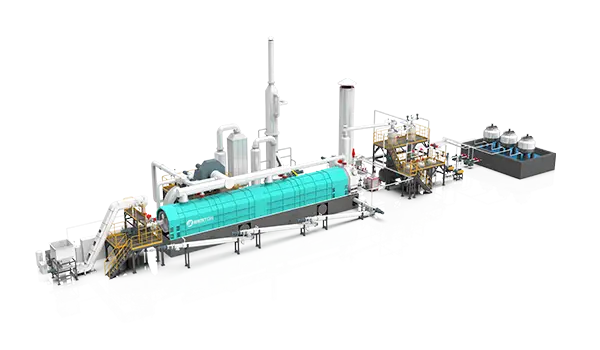
Continuous Type: Blackgold P30
- Process 6,000 tons of plastic waste annually
- 30-day continuous pyrolysis operation
- High automation: 4 operators required
- Get light oil & non-standard diesel
- Policy support and incentives
- Easy to get environmental compliance and approval
Blackgold P30
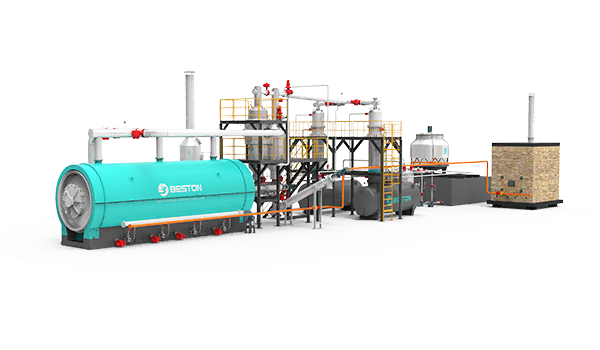
BLJ-20
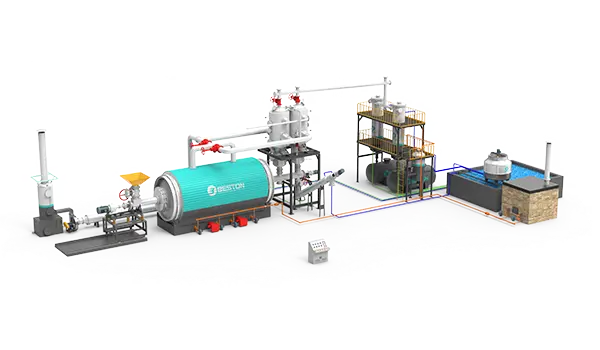
BLJ-16
| Model | Blackgold P30 | BLJ-20 | BLJ-16 Standard | BLJ-16 WAX | BLJ-16 CAT | BLJ-16 ULTRA |
|---|---|---|---|---|---|---|
| Manufacturer | BESTON | BESTON | BESTON | BESTON | BESTON | BESTON |
| Time to Market | 2026 | 2025 | 2013 | 2022 | 2022 | 2022 |
| Motor Brand | Chinese brand | Chinese brand | Chinese brand | Chinese brand | Chinese brand | ABB Explosion-proof |
| Suitable Raw Materials | Waste plastics; Tires; Oil sludge | Waste plastics; Tires; Oil sludge | Whole tire<120cm; Tire blocks<15cm; Oil soil with liquid content<30% | Waste plastic bales (Max.0.9*0.9*1.6m) | Waste plastic bales (Max.0.9*0.9*1.6m) | Waste plastics; Tires; Oil sludge |
| Input Capacity (Max.) | Waste plastic pellets: 0.8-1.05t/h; Rubber powder: 1.25-1.5t/h; Oil sludge:1.8-2.3t/h | Waste plastic pellets: 12-13t/d; Tire: 18-20t/d; Oil sludge:20-25t/d | Whole tire <120cm or Tire blocks<15cm: 10-12t/batch; Sidewall removed tire: 15-16t/batch; Oil soil: 16-18t/batch | 8-10t/batch | 8-10t/batch | Waste plastic bales: 8-10t/batch; Whole tire <120cm or Tire blocks<15cm: 10-12t/batch; Sidewall removed tire: 15-16t/batch; Oil sludge: 16-18t/batch |
| Working Method | Fully Continuous | Batch | Batch | Batch | Batch | Batch |
| Final Oil Quality | Pyrolysis oil; Pyrolysis oil with wax or light oil; Gasoline blending components | Pyrolysis oil; Light oil and non-standard diesel | Pyrolysis oil | Pyrolysis oil with wax | Pyrolysis oil with light oil | Pyrolysis oil; Pyrolysis oil with wax or light oil |
| Reactor Material | 304/310S Stainless steel | Q345R Boiler steel and 304/316L/310S Stainless steel | Q345R Boiler steel | 304 Stainless steel | 304 Stainless steel | 304 Stainless steel |
| Reactor Life Span (Years) | 5-8 Years | Q345R Boiler steel: 2-3 Years; 304/316L Stainless steel: 5-8 Years; 310S Stainless steel: 8-10 Years | 2-3 Years | 5-8 Years | 5-8 Years | 5-8 Years |
| Guarantee (Months) | 12 | 12 | 12 | 12 | 12 | 12 |
| Delivery Time (Calendar Days) | 60-90 | 60 | 45 | 60 | 60 | 90 |
| Land Space Required (L*W*H*m) | 50*20*10 | 40*13*8 | 33*13*8 | 33*13*8 | 33*13*8 | 33*26*8 |
| Packing | 20*6*3m in bulk+13*40HQ | 1*40FR+4*40HQ | 1*40FR+3*40HQ | 1*40FR+3*40HQ | 1*40FR+3*40HQ+1*20GP | 1*40FR+8*40HQ |
| Installation Period (Calendar Days) | 60-90 | 45 | 45 | 45 | 45 | 60 |
Step-by-Step Plastic Pyrolysis Process
Step 1: Raw Material Feeding
Waste plastics are loaded into the reactor manually, via an screw feeder, or through a feeder, followed by airtight sealing.
Step 2: High-Temperature Pyrolysis
The reactor is heated using natural gas, oil, biomass, or LPG. As internal temperatures reach 280°C to 450°C, thermal breakdown occurs, rapidly decomposing long-chain polymers into a continuous stream of oil-gas vapor.
Step 3: Oil-Gas Condensation
The oil-gas passes through a multi-stage tubular condensing system:
- Light Fraction: Condenses into liquid oil and drains into storage tanks.
- Heavy Fraction: Condenses and drops down into heavy oil tank.
Step 4: Syngas Recycling
Non-condensable gas is purified through a water seal and redirected back to the furnace as free auxiliary fuel, dramatically cutting heating costs.
Step 5: Solid Residue Recovery
After cooling, the auto-discharging system extracts solid carbon black residue in a fully enclosed environment to prevent dust pollution.
Step 6: Exhaust Gas Treatment
Combustion exhaust gas undergoes multi-stage scrubbing, desulfurization, and dedusting before being safely emitted in compliance with strict EU standards.