
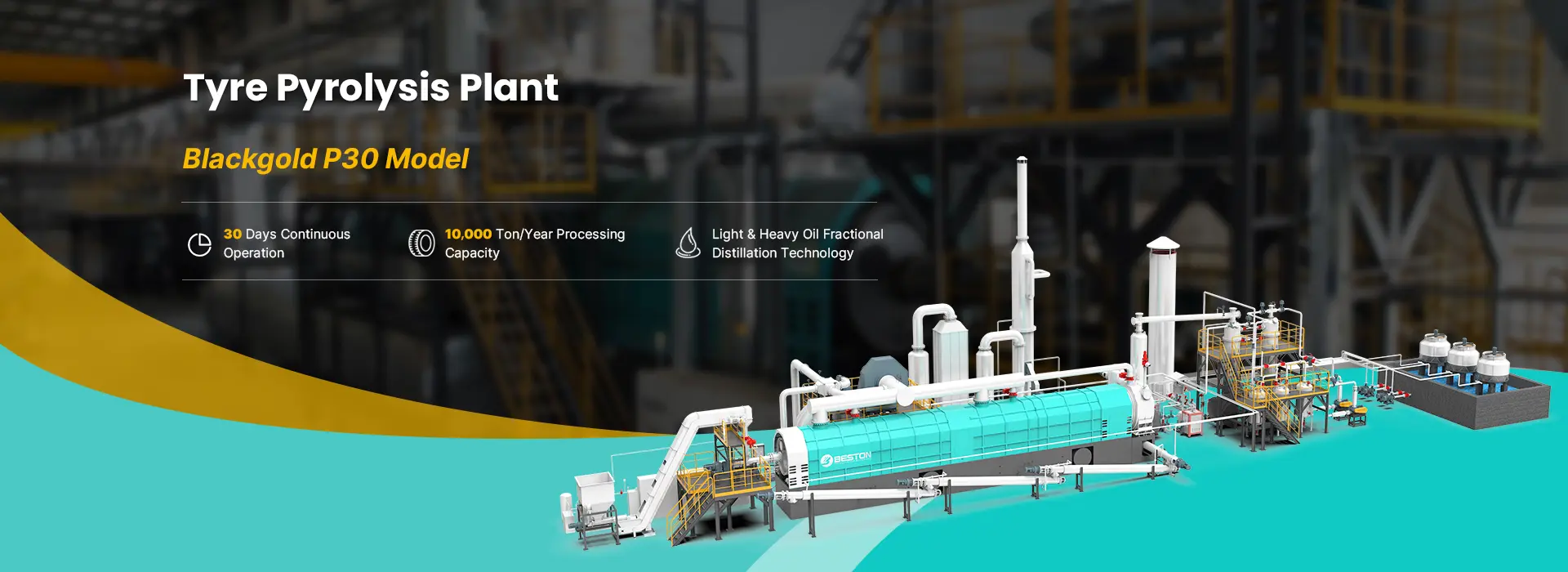
A tyre pyrolysis plant heats scrap tires in an oxygen-free reactor to break down rubber polymers into valuable reusable resources. It converts waste tires into roughly 40% pyrolysis oil, 30% recovered carbon black, 20% steel wire, and 10% combustible syngas. It provides an eco-friendly circular economy solution for tire recycling.
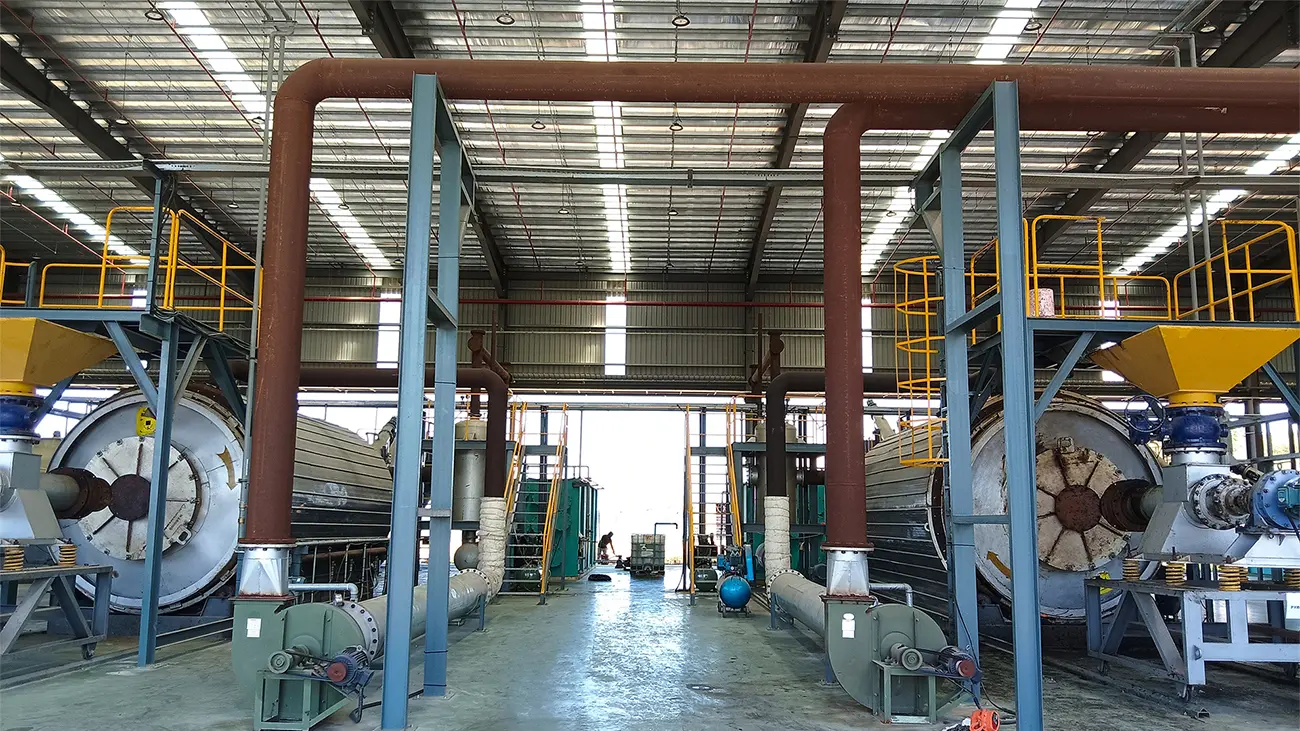
Tyre Pyrolysis Plant Models & Specifications: Fully Continuous & Batch
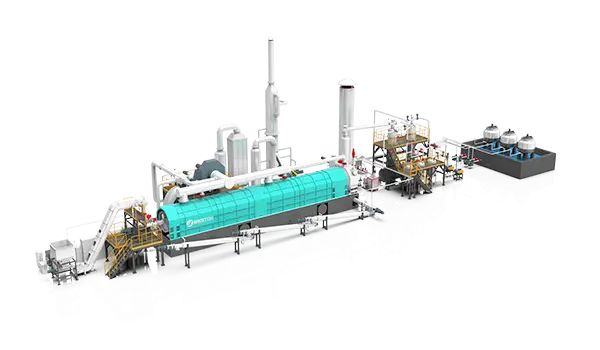
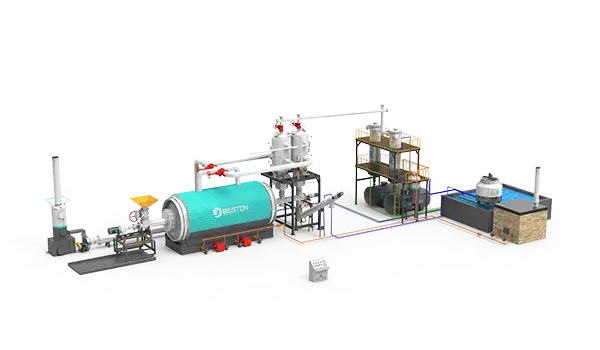
Continuous Type: Blackgold P30
- Process 10,000 tons of tyres annually
- 30-day continuous pyrolysis operation
- High automation: 4 operators required
- Get light oil & non-standard diesel
- Policy support and incentives
- Easy to get environmental compliance and approval
Blackgold P30
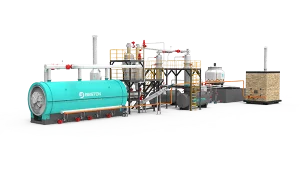
BLJ-20
BLJ-16
| Model | Blackgold P30 | BLJ-20 | BLJ-16 Standard | BLJ-16 ULTRA |
|---|---|---|---|---|
| Manufacturer | BESTON | BESTON | BESTON | BESTON |
| Time to Market | 2026 | 2025 | 2013 | 2022 |
| Motor Brand | Chinese brand | Chinese brand | Chinese brand | ABB Explosion-proof |
| Suitable Raw Materials | Waste plastics; Tires; Oil sludge | Waste plastics; Tires; Oil sludge | Whole tire<120cm; Tire blocks<15cm; Oil soil with liquid content<30% | Waste plastics; Tires; Oil sludge |
| Input Capacity (Max.) | Waste plastic pellets: 0.8-1.05t/h; Rubber powder: 1.25-1.5t/h; Oil sludge:1.8-2.3t/h | Waste plastic pellets: 12-13t/d; Tire: 18-20t/d; Oil sludge:20-25t/d | Whole tire <120cm or Tire blocks<15cm: 10-12t/batch; Sidewall removed tire: 15-16t/batch; Oil soil: 16-18t/batch | Waste plastic bales: 8-10t/batch; Whole tire <120cm or Tire blocks<15cm: 10-12t/batch; Sidewall removed tire: 15-16t/batch; Oil sludge: 16-18t/batch |
| Working Method | Fully Continuous | Batch | Batch | Batch |
| Final Oil Quality | Pyrolysis oil; Pyrolysis oil with wax or light oil; Gasoline blending components | Pyrolysis oil; Light oil and non-standard diesel | Pyrolysis oil | Pyrolysis oil; Pyrolysis oil with wax or light oil |
| Reactor Material | 304/310S Stainless steel | Q345R Boiler steel and 304/316L/310S Stainless steel | Q345R Boiler steel | 304 Stainless steel |
| Reactor Life Span (Years) | 5-8 Years | Q345R Boiler steel: 2-3 Years; 304/316L Stainless steel: 5-8 Years; 310S Stainless steel: 8-10 Years | 2-3 Years | 5-8 Years |
| Guarantee (Months) | 12 | 12 | 12 | 12 |
| Delivery Time (Calendar Days) | 60-90 | 60 | 45 | 90 |
| Land Space Required (L*W*H*m) | 50*20*10 | 40*13*8 | 33*13*8 | 33*26*8 |
| Packing | 20*6*3m in bulk+13*40HQ | 1*40FR+4*40HQ | 1*40FR+3*40HQ | 1*40FR+8*40HQ |
| Installation Period (Calendar Days) | 60-90 | 45 | 45 | 60 |

“Having overseen 40+ installations globally, I recommend the BLJ-16 as the essential entry-level solution for those prioritizing lower initial risk. In contrast, the Blackgold P30 represents the inevitable industry trend for large-scale industrial expansion, offering the high-efficiency, continuous operation required to dominate the market in 2026.”
— Feng, Senior Project Manager, 10+ years in cross-border project execution.
How Tyre Pyrolysis Process Works: Step-by-Step Breakdown
Step 1: Feedstock Pre-treatment
Tires are either loaded whole (for batch systems) or shredded into small chips (20–50 mm) and cleared of heavy steel wires (for continuous systems).
Step 2: Sealed Feeding
Whole tires or pre-shredded tire chips are loaded into the reactor through a sealed feeding system, preventing air from entering and ensuring a fully oxygen-free environment. The reactor is then gradually preheated to prepare for the pyrolysis reaction.
Step 3: Thermal Decomposition
Under heating conditions (180℃–450℃) and micro-negative pressure (<20kPa), rubber polymers crack into oil gas. Lighter oil gases ascend to condensers, while heavy oil is re-fed by the screw into the reactor for re-pyrolysis.
Step 4: Oil Gas Condensation
- Oil condensation: Hot oil vapors pass through cooling pipes and condensers, turning into liquid pyrolysis oil, which is collected in storage tanks.
- Syngas recycling: Uncondensable gases are cleaned and often recycled back to fuel the reactor’s burners.
Step 5: Solid Residue Recovery
After pyrolysis completes, carbon black is safely dischar